







Managing electric vehicle (EV) charging cables might not be an appealing task, yet it is essential to keep the charging site efficient and safe. An untidy charging site can lead to unnecessary wear and tear, safety hazards, or inconveniences in everyday use. This article explores several strategies for proper management of EV cables that would ensure optimization of your charging station and maintain your equipment in good order. From the need for appropriate storage solutions to new tools and best practices, we’ll arm you with practical ideas for building a streamlined and dependable EV charging setup.
Understanding Electric Vehicle Cable Management

Effective EV charging cable management would provide the optimum operation, safety, and durability for the charging equipment. Put simply, proper cable management will help prevent wear and tear on cables-kinking, tangling, or exposure to adverse conditions such as moisture, extreme temperatures, or scorching heat. Key solutions are cable holders, retractable reels, or wall-mounted organizers to hold the cables when not in use. Besides these, general considerations such as selective coiling of cables and placing them in a dry, easily accessible location would also help to keep the cables safe over time. Properly bundled-up cables ultimately give a longer life to the cable, while improving safety and charging efficiency on your EV charging dock.
What is Electric Vehicle Cable Management?
This particular term EV cable management means the systematic arrangement, storing, and maintaining of charging cables so that they perform at their best and have an increased lifespan. Cables management must then fortify safety and convenience, as ill-treated or misplaced charging cables can lead to hazards of tripping, being prone to wear, or even electrical malfunctions.
According to recent data, the most rapid full-fledged EV adoption is taking place worldwide. It is expected that in 2023, about 14 million EVs could be sold, thus an exponential increase compared to previous years. With this boom, the EV charging infrastructure will need to grow along with demand, making proper cable management one of its primary components. An organized cable system can minimize damage caused by environmental factors, including UV rays, moisture, and dirt, which tend to degrade cable insulating material and connectors over time. To improve charging operations and maintain cable protection in highly trafficked or public charging environments, technologies such as automated cable retractors and rugged cable sleeves are among the recent upgrades.
Also, cable management, if well implemented, indeed improves the user experience by reducing downtime for charging and keeping the charging area neat. Studies also show that users are more satisfied and that the operational environment is safer in case the EV charging stations are well maintained. Cable management systems, in addition to inspection and routine maintenance, make up the backbone supporting the growth of the electric vehicle market while also helping keep operational costs to a minimum.
Importance of Proper Cable Management for EVs
Proper cable management for electric vehicles (EVs) is critical to ensuring the operational efficiency and safety of the installation. Improperly managed cables may cause hazards such as trip hazards, increased wear and tear, electrocution, and malfunctioning. By providing good cable management, charging stations can have a well-organized setup that best promotes reliability and reduces damage to connectors and cables. This extends the lifespan of charging equipment while reducing maintenance costs.
Cable management has an added advantage of facilitating ease of access into smoothing out the charging operations. In commercial settings, charging clean stations, clearly labeled and well-maintained, communicate professionalism of the facility and working environment to the clientele. Other recommendations include retractable cable reels, shields, or protective covers, and routine inspections to decrease the risk of system breakdown, safety hazards, and erosion of recharge confidence in the functionality of EV systems.
Common Issues with EV Charging Cables
- Cable Wear and Tear: The cables, when subjected to use or adverse environmental conditions like rain, heat, or UV radiation, will find their insulation and connectors deteriorated in due course of time. Such wear and tear jeopardizes safety and does not perform well.
- Connector Compatibility Issues: Standards such as Type 1, Type 2, or CCS may limit universal compatibility, which poses problems when switching between stations or vehicles requiring different standards.
- Electrical Malfunctions: Any of the loose connections in the cable or any fault in the wiring could cause erratic charging patterns, overheating, or even worse, a complete failure of the charging cycle. If left unchecked, these pose a potential fire hazard.
- Improper Storage or Handling: Such cables, when left in the open or loosely coiled, will sustain all sorts of damage, including broken internal wires. It helps to use proper storage, like designated reels or hooks, to minimize such damage.
- Environmental Damage: Cables are damaged and made inefficient by extreme weather, e.g., being frozen or flooded. The minimization of these influences can be achieved by protective methods and sturdy cable design.
By taking such steps with regular maintenance, inspections, and compliance with manufacturer guidelines, the life and operational reliability of cables for charging EVs can be considerably enhanced.
Types of Electric Vehicle Charging Cables

Generally, EV charging cables are classified based on the charging mode and type of connector. Some of the common types include:
Mode 2 Charging Cable
In general, they are supplied with the car and allow charging from standard domestic outlets. On the cable, there is a control and protection device that ensures safe charging.
Mode 3 Charging Cable
It is used for charging from dedicated charging stations. They require a compatible connector and are manufactured in differing lengths to suit different requirements.
Type 1 Connector (SAE J1772)
Found in certain North American and Japanese EVs, this single-phase AC connector supports slow to moderately fast charging speeds.
Type 2 Connector (Mennekes)
The predominant European connector for both AC and DC charging is also generally referred to as Type 2. It, therefore, gives greater versatility and faster charging rates.
Combined Charging System (CCS)
Called Combo 1 in North America and Combo 2 in Europe, CCS connectors offer AC and DC fast charging through a single port for added convenience.
CHAdeMO Connector
It is a standard for DC fast charging, mainly used by Japanese automakers. It allows a high charging speed and provides an opportunity for vehicle-to-grid (V2G).
The cable will vary depending on the particular EV model, charging site, and speed desired. All being said, knowing these types will enable one to be charged efficiently and safely.
Overview of Electric Vehicle Charging Cables
Electric vehicle (EV) charging cables are significant components within an EV ecosystem since they affect charging efficiency, compatibility, and safety. When choosing a cable, many factors must be looked at:
Connector Type
EV cables should be compatible with the vehicle’s inlet and the charging station. Normal connector types include Type 1 (SAE J1772) and Type 2 (Mennekes) for AC charging, just as CHAdeMO and CCS (Combined Charging System) for DC fast charging. Importantly, these connector types correlate to certain regions and automakers, with Type 2 and CCS widely accepted in both Europe and the United States.
Charging Speed and Cable Capacity
Charging speed is a factor of the current and voltage allowed by the cable, where current is expressed in amperes. Standard household outlets charge slowly, with Level 1 cables, but higher-powered Level 2 circuits facilitate faster charging with Level 2 cables. Anything beyond this, at wildly higher power levels, needs special cables-the DC fast charging often maxes out at 350 kW.
Cable length and durability
Length plays a defining role in convenience and accessibility, especially when considering public charging scenarios. Longer cables allow more freedom in placing the vehicle against the charging station, but may be cumbersome to carry around for storage. Durability comes right next, with weather-resistant, high-quality materials recommended for frequent or outdoor use.
Safety and Certification
Safety standards such as overcurrent protection, adhering to insulation quality, and regional certifications (like UL certification in the US or CE marking in Europe) need to be considered while selecting a cable. Certified cables build up reliability and reduce the possibility of electrical mishaps.
Vehicle-Specific Requirements
Car makers may specify cables to be used for the best performance. Checking the user manual or manufacturer’s recommendations for compatibility will be crucial.
Considering these parameters according to use scenarios and charging infrastructure shall introduce efficiency, safety, and convenience to the charging experiences of any EV owner.
Different Types of EV Charger Cables
EV charger cables vary primarily based on their connectors, power ratings, and compatibility with particular charging stations. Here’s a brief overview:
Type 1 Cable (SAE J1772)
Single-phase connectors are common in North America. Supports power up to 7.4 kW and mainly serves AC charging. Type 1 cables are equipped with a latch mechanism that can be engaged to prevent disconnection while charging.
Type 2 Cable (Mennekes)
Popular across Europe and increasingly worldwide due to its versatility. This connector handles both single-phase and three-phase AC power, with a maximum power output of 22 kW for residential charging or up to 43 kW at public stations. Type 2 cables also feature locking mechanisms to prevent any accidental disconnections while charging.
Combined Charging System (CCS)
CCS cable is a combination of AC and DC charging capabilities and hence, is very versatile. CCS cables support rapid DC charging up to 350 kW, subject to the charging infrastructure. This, in turn, is the fastest way worldwide to charge and has become the preferred option of fast-charging networks globally, given that it drastically reduces the charging time.
CHAdeMO Cable
It is a Japanese standard, mainly utilized for DC fast charging. In advanced installations, CHAdeMO cables may be rated up to 400 kW, although they usually operate at around 50 kW. Bi-directional charging has been a trademark of its services, which means it supports vehicle-to-home or vehicle-to-grid solutions.
Tesla Connector
Used only by Tesla cars in North America, but the connector can be modified with adaptors for use with other EVs. Tesla cables allow AC and DC charging, with Superchargers offering rapid charging at 250 kW.
If an EV owner understands these cable types, he or she is able to ascertain compatibility based on his or her own car and the charging station, thereby ensuring that energy transfer happens safely and efficiently.
Choosing the Right Charging Cable for Your EV
Choosing a charging cable for an electric vehicle (EV) depends on some very important factors, such as the type of EV, the available charging infrastructure, and the speed at which one wants to charge an EV. Here are some factors to keep in mind:
Compatibility with the Connector Types
First things first: make sure to check if the provided charging cable and your automobile have the same charge port. For instance:
- In North America, SAE J1772 connectors, known as Type 1, are commonly used for Level 1 and Level 2 AC charging, with charging speeds usually up to 7.2 kW.
- Type 2 (Mennekes) are more commonly used within Europe for AC and DC charging, providing 3-phase charging up to 22 kW AC.
- For fast or rapid DC charging, CCS and CHAdeMO connectors are the most common, where CCS is found on ultra-fast charger stations capable of up to 350 kW.
Charging Power Rating
Match the power rating of a cable with the onboard charger specifications of your EV. Having a cable with a higher rating than what your EV can use at maximum for charging avoids any bottlenecks appearing from the electrical side. For example, the premium vehicles like the Porsche Taycan can connect to ultra-fast charging cables with an 800-volt rating and charge at 270 kW at stations where these speeds are offered.
Cable Length
Standard cables vary between 16 feet (5 meters) and 26 feet (8 meters), but the actual length will depend on accessibility to charging ports. Longer cables provide more flexibility but can be an inconvenience to store and handle.
Weather Durability and Safety Standards
These days, cables are made to withstand harsh weather conditions, including rain, snow, and quite a lot of UV exposure. Be sure to select a cable with safety certifications like UL, CE, or IEC standards that assure electrical safety and reliability.
Smart Features and Interoperability
Smart cables are advanced cables with features like an integrated display, Bluetooth/wireless connectivity, and energy monitoring systems. Real-time information can be used, and such cables are more friendly with mobile apps or home energy systems.
Henceforth, with the technical requirements kept in mind alongside your EV’s specifications and charging infrastructure, you can select a charging cable whose convenience, safety, and performance are maximized.
Effective EV Charger Cable Management Solutions
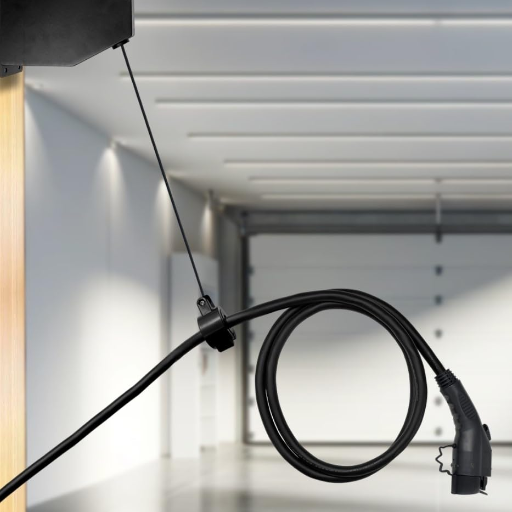
Proper EV charger cable management is essential for safety, durability, and usability. These are some possible solutions for keeping the EV charging setup neat and functional:
Wall-Mounted Cable Holders
These cable holders affix the cable to the wall, preventing tangling, thus protecting it from abrasion by dragging.
Retractable Cable Systems
When not in use, retractable systems will automatically wind the cable, maintaining an orderly and clutter-free zone.
Cable Hooks and Brackets
Simple and inexpensive, along with holding cables up off the ground so they are less likely to cause tripping hazards, hooks or brackets also allow less exposure to dirt or moisture.
Portable Cable Organizers
Light and compact for storing and carrying, ensuring that cables remain in peak condition.
These solutions will not only extend the charging cable’s service life but also make your EV charging setup safer and more comfortable to work with.
Wall Mount J Hook Charging Solutions
Wall-mount J-hooks for EVs offer a much-needed solution for the organization and storage of EV charging cables. These hooks are generally made from materials that are beyond reproach in quality, such as steel or reinforced plastic, which are intended to support the weight of charging cables while maintaining any bending or kinking that could cause damage.
Installation is quite simple; one fastens the hooks directly onto the walls using screws or adhesive backing, hence ensuring a firm hold. They fit different sizes of cables, making J hooks highly versatile for use with EV charging stations at home or at businesses. On the other hand, the small design provided by these hooks saves space and keeps cables off the floor, so the dirt accumulation, moisture exposure, and tripping hazards remains down.
In a wall mount J hooks investment, one may earn the difference of keeping charging cables long-lasting and a spotless professional look for the entire area. For even greater durability and enhanced cable management, you should always opt for hooks with an additional protective coating and weight-bearing certifications.
Using Cable Holders and Organizers
Cable holders and organizers practically keep the charging station orderly while also preventing damage or tangling of cables. A variety of formats exist for these tools, including adhesive cable clips, desktop organizers, and magnetic cable holders to accommodate the setup. The best cable organizers possess a non-slip material that promotes adhesion with a strong adhesive backing to allow their placement onto several surfaces, even so they minimize movement during daily use of these cables. Added flexibility is given to the user through modular designs and the possibility of using cables of different sizes to manage power cords, charging cables, or data wires. This way, the integration of cable holders and organizers into a setup significantly improves the working environment, helps extend cable life, and achieves cleanliness within the cluttered area.
Extendable Arm Systems for Cable Management
Extendable arm systems have been an innovative solution in cable routing applications, giving more flexibility in ever-changing settings. The solutions generally have adjustable arms with either pivot or sliding mechanisms to adjust the arm’s length and position for the user’s preference. Typically, aluminum alloys or reinforced plastic materials are used in their construction to ensure their long-term reliability and resistance to wear.
A greater advantage of extendable arm systems is their adaptability, suitable indeed for workspaces with components that are frequently moved, such as adjustable desks, medical equipment, or industrial machinery. They keep cables neat and protected against tangling and abrasion, and eventual damage. In many cases, the designs contain built-in cable channels or clamps for secure cable routing, further improving their functionality.
In general, these solutions stress mounting options for the ease of installation. Depending on the use case, the options include mounting onto the desk, the wall, or the ceiling. They accept nearly everything offered in cable types and sizes, for both power and data. By placing an extendable-arm system, one attains not only a better cable management system but also greater flexibility and functionality in cable-dependent setups.
Installation and Setup of EV Charging Accessories
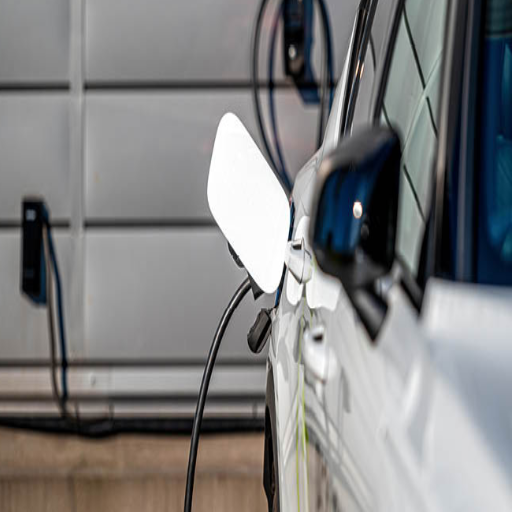
When installing and setting up an EV charger, location selection should be the first step to carry out the installation. The place must be accessible, ventilated, and must comply with the relevant code and permit requirements. Next, one should check the supply voltage and amperage to ensure these match the charger equipment requirements.
Attach the charging unit firmly to a surface using the mounting hardware supplied with that unit. Based on installation conditions, one may also be required to install charging accessories such as cable holders or stands. Next, wire the unit into the electrical circuit, ensuring that wiring is grounded correctly; it may require inspection by a licensed electrician. Lastly, go through the functional test of charging an EV and resolve any issues if there are any. Remember to put safety measures FIRST during this entire process.
Installing a Charger Cable Holder Wall Mount
Wall mounting a charger cable holder must start after choosing the optimal location that is offered by convenient for daily use and minimizing cable strain. The wall mount should be about 3-5 feet from the charging station so that it can both handle the cable well and be easily accessible. Using a stud finder, locate an area on the wall that can be securely used for mounting. A wall stud will give it maximum support for carrying the weight of the cable.
Ensure that the mounting area is clean, then place the wall mount in the area and mark the places for drilling through the pre-drilled holes. Use heavy-duty wall anchors that can hold at least 25-30 pounds if drywall is used and there is no direct stud access. This amount of weight generally accounts for a little more than the weight of an EV charger cable, which usually weighs 10 to 20 pounds, depending on the type and length, being a commercial standard.
Drill the necessary holes at the marked points on the wall, using a drill bit fit for the wall material. Use the screws that have come with the holder to fix it into place, securing them tightly to avoid any give or wobble on the part of the holder. Then check the holder for level using a spirit level. Having done this, wind the charger cable on the mount, making sure there are no sharp kinks or bends in the cable. Correct storage directly correlates with an extended life of the charging cable as well as maintaining its operational integrity.
It would be best to check the mounting and the mounting fixture regularly, especially in very high-use locations, so as to monitor their stability. When any sign of looseness is noticed, the screws should be tightened instantly, or the mounting fixture should be replaced if necessary.
Setting Up an Electric Vehicle Cable Management System
Each adept cable management system for an electric vehicle shall maintain safety, convey ease of use to those utilizing it, and inculcate longevity into charging equipment. To be able to set this system reliably, first determine the best area near the power source, preferably in compliance with a local electrical code and with sufficient free space to move the cable around. Try mounting a very robust and weather-resistant wall mount or retractable cable reel down, so that it can help reduce wear and tangle. These should usually come with their own set of hooks or spools that prevent damage to cable insulation.
Make your system accommodate the average length of the EV charging cable, allowing some slack for attachment to the vehicle. On top of that, keep the system such that the cable remains above the ground, which prevents persons from tripping on it or the cable from getting exposed to moisture. Always examine for wear and tear on the components. If anything should go wrong, there are measures to be taken quickly in keeping the best-performing, safe state of your cable management installation. When paired with the right organizational accessories, this system turns charging into a stress-free affair.
Best Practices for Cable Installation
Adhering to industry standards when installing cables is necessary if we want to ensure long-term function and safety. Selection of cables must emphasize high-quality insulation materials like XLPE, cross-linked polyethylene, or PE, thermoplastic polyethylene, which have tested properties of high durability against environmental stress. Cables must be grounded to avoid electrical hazards. For instance, grounding standards require grounding conductors to be properly bonded to the equipment frame as per the NEC, thus reducing shock hazard.
Cable routing must be designed in such a way as to avoid bends or angles that are in excess of those tolerable by any cable; each such occurrence contributes to internal stress and hence reduces the cable’s life. Research, for example, proves that cables bent with a radius less than 10 times their diameter are at direct risk of electrical failure and structural failure.
The next factor is environmental considerations. When installing outdoors, one needs to consider the impacts of UV exposure and temperature variations. The data show that, being exposed to UV radiation for a long period without much protection, the cables lose insulation up to 30% in integrity over time. In any case, using outdoor cables with protection against UV rays and considering the local climatic conditions would eliminate such effects.
In the end, maintenance remains important. Never fail to carry out an inspection every six months to detect any abrasion, overheating, or abnormal tension that might precede untimely power outages. By observing these detailed best practices, you end up with an efficient and safe cable installation system that meets modern requirements.
Benefits of a Well-Organized EV Charging Area

Among the various benefits that a well-organized EV charging area offers, one has to do with efficiency. Multiple vehicles may charge simultaneously without congestion. The opposite could cause some serious inconveniences for everyone. Second, it adds to convenience with proper signage and excellent layout. This reduces confusion and wait times. Third, it has to do with safety: tripping hazards are minimized, and cable management is ensured. Finally, scalability comes into play; future expansions could be made to meet the needs expected to develop with the adoption of EVs.
Enhanced Safety and Reduced Wear
Charging areas optimized for EVs play a major role in safety and the reduction of wear and tear of infrastructure and vehicles. Use cable management systems to avoid tripping hazards with stressing effects on charging cables that shorten their life span. Weatherproof materials with enclosures protect charging equipment from environmental damage, guaranteeing such durability and constant operation. Clearly marked parking spaces, along with a lighting system, increase visibility inside the parking lot and decrease the chances of accident occurrence while in use. These design considerations reduce wear on the connectors, avoid mechanical stress, and assure reliable long-term performance for the user and infrastructure provider.
Improving Accessibility and Convenience
I apply design principles based on human factors while focusing on user-centric elements such as an easy-to-use system with simple signs to guide the users correctly. I allow universal design to cater to different requirements, including those with mobility impairments. Charging stations should preferably be situated close to entry and exit points to reduce any barriers to their use. The overall goal is to synergize these components such that every user goes through a smooth, hassle-free, and inclusive experience.
Maximizing Space Efficiency
The concept of space maximization refers to the process of asserting the full use of spaces available for design and ensuring their functionality and accessibility. Some of the chief means include: the use of modular and stackable components to augment the degree of adaptability, the use of vertical space by shelving or overhead storage, and the use of furnishings that serve two purposes. Laser spatial planning tools will help to pick their perfect layouts and the least wasted space. An innovative, data-driven approach can ensure that spaces reflect actual need by studying how users function and traffic patterns, decreasing underutilized areas. Applying all these will provide the best balance between efficiency and practicality in any environment.
Reference Sources
1. Getting Ready for Electric Vehicle Charging Stations
2. Inductive Charging – Simplifying the Charge to Enable Mass Adoption
3. Electric Vehicle Policy: The Main Pillar of Indonesia’s Future Energy Security
Frequently Asked Questions (FAQs)
What is electric vehicle cable management?
Electric vehicle cable management refers to the array of systems and apparatus used to tidy up and store charging cables for electric vehicles. These systems could include charging cable holders, organizers, and holsters to make sure the charging cables remain neat and accessible, thereby potentially creating clutter and hazards in garages or charging stations.
How does a charging cable organizer help me in the garage?
A charging cable holder has several benefits and empowers the garage with a specific dedicated area for the electric vehicle charging cables. Keeping the charging cables on one side of the wall-mounted cable holder J, or any J-hook charging wire organizer, saves them from being laid on the garage floor, where they can trip people and provide wear and tear to the cables over time.
What cool things will I gain from an EV charging cable organizer?
A cable organizer helps keep the environment clean and orderly, and it offers an easy way to locate and use charging cables. Protecting cables from damage with these cable organizers ensures extended life for the cables, thereby assisting in safely charging the electric vehicle.
How do I install a cable management solution for my EV charger?
Installing a cable management solution for your EV charger means choosing and installing suitable accessories-whether that is a wall-mount J hook or a heavy-duty charging cable holder-to keep the cables neat. This normally entails securely fastening the holder or organizer to your garage wall following the manufacturer’s directions, ensuring it can support the weight of the cables and additional pressure from regular use.
What are the different types of accessories available for EV charging?
Various EV charging accessories are available—from cable holders and combinations with J-hooks to portable accessories for the EV. These accessories are made to improve and enhance the charging experience while keeping cables in easy reach and organized.
What is the function of a charger cable holster?
A charger cable holster is a storage device that holds your EV charging cable neatly while not in use. It protects from abrasion and allows the charging cable to be ready for use anytime you want to plug your EV, a very practical accessory to install in your home EV charger setup.
Would it be fine to use a portable EV cable holder for my electric vehicle?
Yes, anyone who needs mobility in their charging setup should look for a portable EV cable holder. They allow you to place your charging cables just about anywhere, making the whole EV charging experience easy to undertake wherever you might be.
How Does an Extendable Arm for the Electric Vehicle Work?
An extendable arm for the electric vehicle provides a flexible method of handling the charging cable. This option would let you change from one position to another in the cable holder or organizer, making it easy to reach and store the cable while still holding it firmly in the holder when not required.
What should I knuckle down on lecture about while making my choice on a cable management system for electric vehicles?
Electric vehicle cable management systems can be considered based on durability, ease of installation, and compatibility with the EV charger. A system should easily fit into the garage space while accommodating the length and type of charging cable. You must also think about features such as a 180° swivel arm for ease of use.