








Window air conditioners are a popular option for consumers seeking energy-efficient cooling. Still, you must consider the electrical ratings, an essential checklist item for any purchase or implementation. What must be checked is how many amps it draws. This would keep any usage hazards at bay, help keep energy costs in check, and determine if the house wiring can handle the load. The article discusses the factors that control the amperage of a window air conditioner, standard amperages, and tips for increasing energy efficiency. Whether you are a homeowner, renter, or simply curious about energy efficiency, this guide will first refresh the fundamental information.
Understanding Window AC Units
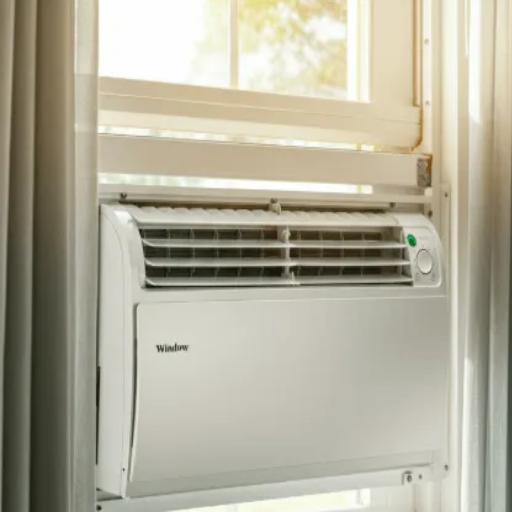
Window air conditioners are small air conditioners used for cooling single rooms by being installed in a window or wall opening. It takes in the warm air, cools it through a refrigeration process, and releases the cooled air into the room. Coincidentally, the unit dumps the heat out of the window, thereby making window air conditioners an efficient choice for localized cooling. These are the most common because they are the cheapest and easiest to install. Cooling a small to mid-sized area is ideal for these units.
What is a Window Air Conditioner?
Window air conditioners serve as a superb cooling installation, with compactness being the main feature offered for ease of installation. Employed in cooling a single room or any small space, they would hence be perfect for apartments, dorms, or small office spaces. According to recent statistics, a modern window air conditioner has a cooling capacity ranging from 5,000 to 25,000 BTU (British Thermal Units). It can cool an area of up to 1,500 square feet, depending on the model selected.
They sit in the first category of advantages due to the price before installation. Window-based air conditioning units cost way less compared to central air conditioning systems. Being more energy efficient than central AC, Energy Star-rated window ACs save you up to 10 percent on your electricity bill over the generic ones.
Another perk of recent models is their ability to be remotely controlled, have programmable timers, and feature eco modes for energy management. Additionally, some units have embraced innovative technology, allowing you to set and lower temperatures remotely from your smartphone app; it simply couldn’t be more convenient or customizable. The incorporation of new noise-reducing technologies and upgraded air filtration systems means that modern window air conditioners now have the potential not only to deliver cool air but also to improve the quality of indoor air and ensure comfort.
And this, in turn, means that window air conditioners provide a convenient solution for balancing expenses, efficiency, and comfort for many working households and businesses.
Different Types of Window ACs
Window air conditioner units come in a variety of types, each suited to particular needs and personal preferences. Here are the common categories, alongside their features and benefits:
Standard Window Air Conditioners: Being the simplest type, standard window air conditioners are considered to cool single rooms or small spaces. The units are compact and hence very easy to install, as they fit into most standard-sized window frames. Cooling capacities therein would typically range between 5,000 and 12,000 BTU, depending on the space considered, with a capacity of 150-550 square feet.
High-Efficiency Window Air Conditioners: Designed to meet energy-saving standards, high-end models are often awarded the ENERGY STAR label for their significantly low power consumption. For instance, most units include advanced compressor technologies, sleep modes, and auto-adjustable thermostat settings, allowing energy to be used optimally. Typically, these air conditioners can be purchased at a lower cost and consume about 10 to 15 percent less energy than standard models, which pays for itself over time in utility cost savings.
Smart Window Air Conditioners: These smart AC units connect via Wi-Fi and can be controlled remotely using smartphone apps or virtual assistants, such as Amazon Alexa or Google Assistant. For the tech-savvy homeowner, these devices allow setting up operation schedules, adjusting temperatures remotely, or even checking energy consumption at any time. Smart ones are a favorite among those who value ease of use and total customization.
Casement Window Air Conditioners: Great for vertical or sliding windows, casement window air conditioners could be a practical choice for many Texas homes. Essentially, the units are designed specifically to fit into narrow window panes that standard models cannot accommodate. They have similar cooling capacities to standard models but are built to be taller and slimmer for vertical frame fitting.
Dual-Hose or Heat-and-Cool Window Air Conditioners: That really makes these two in one which cool-and-heat appliances a great solution all year round. Being a dual-hose system, the hot air is evacuated from the room more efficiently than with a single hose. Heating ability is a blessing in areas with seasonal temperature variations.
Large Capacity Window Air Conditioners: Ideal for larger spaces, such as living rooms or commercial areas, these units are also powerful, with a cooling capacity of 15,000 to 25,000 BTUs. The engineering in these air conditioners is designed to cool an area of about 1,500 square feet. So large, yet relatively energy-efficient, thanks to the new design improvements, they provide good cooling and heating without an energy premium.
These types of window air conditioners serve a range of needs, from energy-saving innovations to enhanced cooling capabilities for large spaces. Picking the right unit involves balancing the requirements of room size, energy efficiency, and innovative features to achieve the perfect, superb, and cost-efficient comfort.
How Window ACs Function
Window ACs operate on the principle of cold condensation and air circulation to enhance heat transfer from the room. It involves the compressor, condenser, evaporator, and refrigerant. To explain further, here is the stepwise procedure:
Air Intake and Filtration: The unit begins operation by drawing warm air from the room through the front grilles. This air passes through a filter that traps dust and other particulate matter, thereby ensuring that cleaner air is recirculated within the room.
Cooling Process: The refrigerant primarily absorbs heat inside the unit. The compressor forces the refrigerant through the coils, where it changes from a liquid to a gas. As the refrigerant passes through the evaporator coil, it absorbs heat from the warm air, leaving the air cool and dry.
Heat Discharge: As it travels, the hotter refrigerant is directed to the extraction coil, located at the back of the air conditioner, facing the outside atmosphere. This tool dissipates the heat taken from indoors to the outside by blowing outdoor air across the condensation coil.
Air Recirculation: After cooling, the air is recirculated back to the room through the vents at the front, using an indoor fan, to maintain continuous airflow and keep the set temperature constant.
In addition, modern window air conditioners incorporate energy-saving features such as programmable thermostats, sleep mode, and variable fan speeds to increase convenience. EER (Energy Efficiency Ratio) and SEER (Seasonal Energy Efficiency Ratio) standards can be followed to provide an overview of the performance of such devices. For example, a unit having an EER rating of over 10 would minimize power consumption while maximizing cooling output.
Some high-end units also incorporate innovative technologies, enabling them to be operated via mobile apps or integrated with other home automation devices for optimizing cooling schedules and energy management. By understanding these functional details, buyers can make informed decisions and select a unit that best suits their needs, ensuring superior performance.
Amperage and Power Consumption
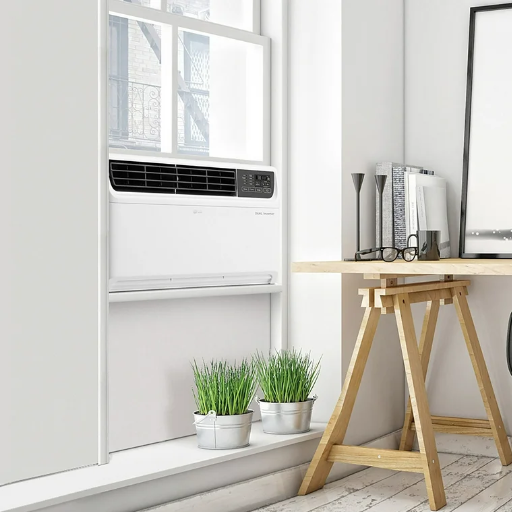
In determining the efficiency and cost of operating any air conditioning equipment, amperage and power consumption remain the most critical factors. Amperage is the current that the unit draws during its operation, whereas power consumption, measured in watts, indicates total energy usage. Energy usage can be computed by multiplying the amperage of the unit by the voltage of the electrical system you have in your home or premises. Selecting units with lower amperage and higher ratings for energy efficiency (EER or SEER) will surely help reduce your electricity bill and environmental impact. Details for a particular model should be verified in the manufacturer’s specifications.
What Are Amps and Why Do They Matter?
The ampere is the unit in which electrical current is measured; the current is the flow of electrons through a circuit in general. Knowing amperes is crucial in choosing and handling electrical equipment, as they must conform to the circuit’s capacity. Excessive loads may result in damage to the circuit or even an electrical fire. An electrical panel is typically configured to handle a specific maximum number of amperes, 100, 200, or more, depending on the building’s requirements.
Standard household circuits in residential systems will carry 15 or 20 amperes. High-amperage-drawing equipment, however, requires dedicated circuits. Air-conditioning units, for example, may be rated from 15 up to 60 amps according to their size, whereas large appliances like ovens or dryers might typically require 30 to 50 amps. Any charge above the rating of a circuit will cause breakers to shut off or fuses to blow!
Being able to relate to amperes would also help you in interpreting energy efficiency and power usage. Since electrical power is a function of amps and volts (watts = amps × volts), knowing the amp rating of your devices will enable you to manage energy more effectively and estimate costs. For instance, a 10-amp draw on a 120-volt circuit would consume 1,200 watts of power. The proper awareness of amperage facilitates the selection of equipment that meets your need for safety and efficiency.
Calculating the Amps of a Window AC
To determine the amperage of the window air conditioner, the unit’s wattage and the circuit’s voltage must be known. Generally, modern window ACs show wattage and voltage on a label or in the user manual. For an easy example, considering 120 volts and a 1,500-watt power rating of the unit, one can use the formula:
Amps = Watts ÷ Volts
Plugging in the values:
Amps = 1,500 ÷ 120 = 12.5 amps
This simply means that the air conditioner needs 12.5 amperes to run. Care should be taken to ensure that the circuit handling all power to the AC unit is safe for such a load. Typically, standard residential circuits are rated at either 15 or 20 amps. Therefore, any equipment rated at 12.5 amps must have a clockwise rotation to prevent any potential overloading.
Also, many window ACs are energy-efficient varieties with variable wattage numbers, mainly when they are run below full capacity or in an energy-saving mode. For example, a unit might draw 800 watts in eco mode on a 120-volt circuit, which could reduce the amperage to approximately 6.67 amps. Understanding these differences can help facilitate alternative uses and lead to cost savings.
There’s a significant variation in amperage for larger window AC units or units operating on 240 volts. For example, a 10,000 BTU window unit might draw approximately 1,000 watts at 120 volts, which is equivalent to 8.33 amps. Comparatively, a larger 24,000 BTU unit designed for 240 volts would draw approximately 8.33 amps, or 2,000 watts, because the doubled voltage reduces the current.
Always check whether your wire and breaker are rated adequately according to the specifications of your AC unit to ensure safety and prevent damage to the equipment.
Average Amperage for Different Window AC Models
The amperage of a window air conditioning unit depends on its cooling capacity, typically measured in BTUs, and on the voltage at which it operates. Let us examine the average amperage usage based on standard window A/C models:
5,000 BTU Units (4-5 amps on a 115-volt circuit): Typically small A/Cs for single rooms and small spaces.
10,000 BTU Units (Approximately 8-10 amps on a 115-volt circuit): These units are designed for medium-sized rooms.
15,000 BTU Units (Approximately 12-15 amps on a 115-volt circuit): These units are designed for larger spaces and may sometimes perform better on a 220-volt circuit, thereby reducing the current demand.
18,000-24,000 BTU Units: These are suitable for large rooms or small commercial spaces, which typically draw approximately 7 to 10 amps on a 220-volt circuit.
These numbers may be modified, however, depending on the unit’s energy efficiency, the manufacturer, and additional features, such as inverter technology. These are general estimates; therefore, always check the exact rating label of a particular air conditioner and consult its manual. Confirming that the air conditioner is compatible with your electrical system maintains energy efficiency and avoids any risk.
Factors Affecting Amps in Window ACs
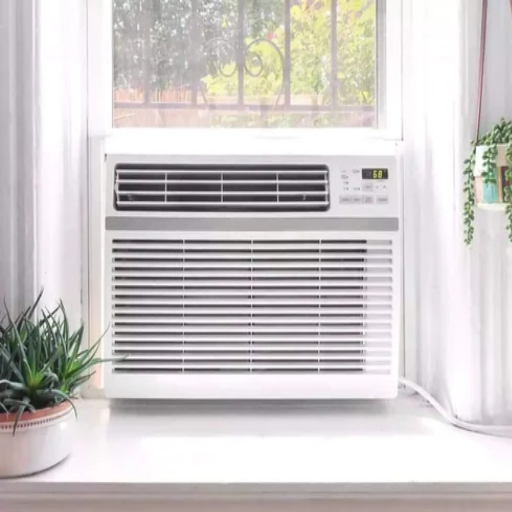
Several factors can influence the amount of amperes used by a window air conditioner, and knowing these factors assists in calculating its energy consumption.
Cooling Capacity (BTUs): The higher the BTU rating, the more powerful the unit is, and the more amperes it draws.
Voltage: For 220-volt units, the amperage draw is less than that of 110-volt units, provided the two units are rated the same for BTU capacity; this occurs due to voltage efficiency.
Energy Efficiency: Units with up-to-date, energy-efficient configurations tend to use fewer amps, thanks to the amalgam inverter technology.
Environmental Conditions: The external ambient temperature or poor-quality insulation may cause the air conditioner to consume more amps.
Maintenance: A well-maintained unit, with clean filters and coils, draws and uses fewer amps than one that has never been serviced.
When these factors are taken into consideration, the AC will run efficiently with power consumption management. For exact details, always refer to the unit’s specification and user manual.
Size and BTU Ratings
There is a close relationship between the sizing of an air conditioning unit and its BTU rating, with the BTU rating determining the cooling capacity that a particular air conditioning unit can provide. Choosing an air conditioner with the exact BTU rating for the size of your space is crucial for conserving energy and ensuring the unit performs at its best.
BTU ratings can range from approximately 5,000 BTUs for tiny units, which cater to small rooms of roughly 150 square feet, to over 24,000 BTUs for the largest units, suited for areas exceeding 1,500 square feet. They should be between 8,000 and 12,000 BTUs for an area from 300 to 500 square feet. If the BTU capacity is not compatible with the room size, additional costs will be incurred due to either insufficient cooling or overcooling; thus, both scenarios represent inefficient energy use cases.
Regarding factors such as ceiling height, insulation quality, and the number of windows, all three will impact the BTU rating requirements. A room that offers sound insulation tends to require fewer BTUs, whereas one with big windows exposed to direct sunlight usually calls for a higher rating to offset heat gains. Assessing the peculiarities of your house or building will help you select the best BTU capacity for your requirements, ensuring a well-balanced and cost-efficient cooling system.
Energy Efficiency Ratings (EER)
The energy efficiency ratio (EER) is a single measure that rates an air conditioning unit’s efficiency in cooling it provides versus the power consumed. On the cooling side, the unit is measured in BTUs (British Thermal Units), while on the electric side, it is measured in watts. The more efficient a system is, the higher its EER; therefore, the EER is vital to anyone wishing to save energy costs and reduce ecological harm.
For example, an air conditioner with a 12,000-BTU cooling capacity, drawing 1,200 watts of power, would have an EER of 10 (calculated as 12,000 ÷ 1,200). In general, energy-conscious units tend to have EER ratings above 10, while premium-tier units have EERs of over 12. Setting minimum EER requirements is a tactic that some laws or standards, possibly those established by the U.S. Department of Energy, use to achieve energy savings.
Beyond price, the buyer should consider the long-term savings, which are influenced by the EER value. For example, a higher EER air conditioning unit may not be less expensive initially, but it will save on electricity bills over the unit’s operational lifetime. With the help of the EER and other energy certifications, such as ENERGY STAR, consumers can contribute to their objectives, both financially and environmentally.
Ambient Temperature and Usage Patterns
The ambient temperature and usage patterns determine the efficiency and cost of an air conditioning unit. It operates most cost-effectively when the outside temperature is within its designed range of performance. For example, when a heat wave occurs, an inverter unit may consume more energy to maintain the desired indoor temperature.
Usage patterns also affect energy consumption. Constant operation during the day means more electricity is consumed as compared with intermittent use. Setting a thermostat at 78°F (25.5°C) in summer is the best compromise for comfort and energy saving. Using programmable thermostats and timing the cooling schedule to coincide with peak and off-peak energy demand hours can also help reduce energy costs.
A programmable thermostat can easily save as much as 10% per year on cooling costs if used to adjust the temperature by 7 to 10 degrees for 8 hours during the day. When these methods are combined with knowledge of local climate conditions, users are empowered to make informed decisions regarding the optimisation of their cooling systems.
Impact on Electricity Bills
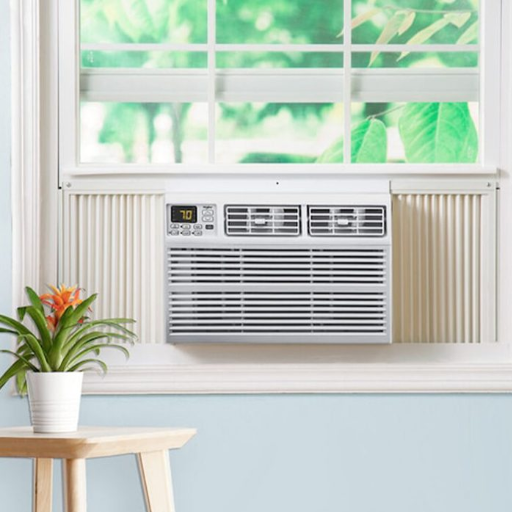
For example, costs incurred can be significantly reduced by optimizing cooling systems. Programmable thermostats enable homes to save up to 10% per year on cooling costs by adjusting the temperature. Certified technicians are recommended for the maintenance of your cooling equipment. Sealing any air leaks in windows or doors will also provide further savings. Practically, these measures would help save money and promote energy efficiency.
How Amps Affect Your Energy Costs
Ampere (A) or amperes (A) measure the flow of electric current in an electrical circuit. These amps directly affect my energy bill since higher amperage devices consume more power. The more amps an appliance or equipment has, the more electricity it consumes, and hence it raises my utility bill. That being said, I usually install energy-efficient appliances, and I always unplug an item when it is not in use, as this reduces the current flow and lowers my energy expenses.
Estimating Monthly Costs for Running Window ACs
The cost of running a window AC depends on the wattage of the AC, the number of hours it is run daily, and the electricity rates in your area. A typical range for the watts of window ACs is anywhere from 500 to 1500 watts, depending on the size and efficiency of the unit. For instance, a 1000-Watt (1 kW) window AC unit would consume roughly 240 kWh of electricity in one month if it were run for 8 hours daily: (1 kW x 8 hours x 30 days).
The energy consumption should then be multiplied by the local area’s electricity rate to obtain the cost. For instance, if the rate is $0.15 per kWh, $36 would be incurred in electricity charges per month (240 kWh x $0.15). On the other hand, an energy-saving model or an Energy Star-rated unit can significantly reduce consumption. Further savings can also be achieved by setting the thermostat to a comfortable medium temperature, such as 78°F, and maintaining the system properly, including regular filter cleaning.
Energy-Saving Tips for Window AC Usage
Using a Smart Thermostat or Timer: A programmable thermostat or timer controls the operating hours of a window AC unit. For example, when the AC is set to stop functioning during the day and start again at about half an hour before your arrival, it is a good energy saver. Reports indicate that such a small automation can result in savings of up to 10% on annual cooling costs.
Seal Air Leaks Around the Unit: Insulate the area properly around the window AC unit to prevent cool air from escaping and warm air from seeping in. Foam weather stripping and caulking work well for sealing. Studies show that small air leaks almost always increase energy consumption by 30%.
Go for Energy-Efficient Units: Consider an Energy Star-rated window AC unit for a drastic decrease in energy consumption. Such models use approximately 10% less energy than standard units and typically come with features like energy-saving and eco-mode cooling. For example, replacing an early 2000s model with an Energy Star unit could save the average user about $50 in electricity annually.
Keep Your Filters Clean and Avoid Neglecting Maintenance: A dirty filter impedes airflow, causing the AC to work harder and consume more energy. Cleaning or changing filters every couple of weeks during the months of heavy use can increase efficiency by up to 15%. Additionally, proper maintenance, such as clearing debris from vents on the spot and checking coils, ensures the system operates optimally.
Use the Fans for Assistance: Ceiling fans or portable fans, combined with the wind from the window AC, circulate cool air more efficiently, allowing the thermostat to be set a couple of degrees higher without sacrificing comfort. Cooling costs can be reduced by 10%.
Shade Your Unit and Windows: Keeping the window AC away from direct sunlight or shading your window with curtains or blinds will reduce heat gain inside your house. In addition, a shaded window AC will cool more effectively and hence require less energy during peak hours of sunlight.
Unplug Unnecessary Units: Many window ACs still use standby power unless they are unplugged year-round or whenever away for more extended periods.
Choosing the Right Window AC
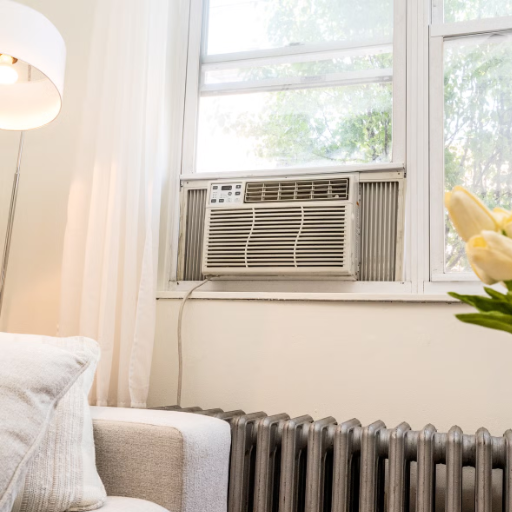
When choosing the correct window AC, there are three vital factors to consider:
Size and capacity: An AC’s cooling capacity, measured in British Thermal Units (BTU), should be suitable for the room’s size. In most cases, an undersized unit will not be able to cool the room adequately, whereas an oversized AC can consume more energy and dehumidify less effectively. Various manufacturers offer guides for sizing recommendations.
Energy efficiency: Selecting an Energy Star model or those with a high Energy Efficiency Ratio (EER) rating will maintain low electricity bills and preserve the environment.
Features and noise level: Choose one with features that suit your needs, such as adjustable fan speed, remote control, or programmable timers. Check noise levels, especially if the device will be used in bedrooms or study rooms, and consider the decibel rating.
Consider these factors to achieve efficient cooling and durable comfort.
How to Select the Right Amperage
Selecting the correct amperage ensures safety and proper electrical operation. First, calculate the total power consumption in watts of all devices or appliances you plan to connect. Then, divide this number by the voltage of your electrical system (usually 120V or 240V) to find the required amperage. The circuit breaker amperage should always be equal to or more than this calculated amperage. For larger appliances, such as air conditioners or electric heaters, identify the amperage requirements on the manufacturer’s labels. Additionally, to account for potential upgrades, select a slightly higher amperage to ensure safety from overloading circuits. Always consult an electrician.
Energy-Efficient Window AC Units
Energy-efficient window air conditioners provide a cost-effective and environmentally friendly cooling solution for homeowners. These units use advanced technologies to consume less energy while providing maximum comfort. When choosing a unit, it is always advisable to select one certified under the ENERGY STAR program, which is approximately 10% more efficient than a regular unit. Programmable timers, sleep modes, and variable thermostats will enable users to conserve energy during off-peak or low-demand periods.
For example, such a unit rated at 15 SEER can yield savings of up to 25% compared to one with a rating of 10 SEER. Getting the right size matters in this scenario too: an undersized one would struggle while cooling a bigger area, and an oversized one would waste more energy cycling on and off. AC units with approximately 5,000 BTUs are best suited for spaces measuring roughly 150 sq. ft., while units with 10,000 BTUs are typically needed for larger areas of 500 sq. ft. or more.
Besides those, some also allow you to control the settings on your gadget remotely. By investing in an energy-efficient window AC unit, you are cutting down on your electricity bills and also cutting down on the total carbon footprint, which moves towards a greener environment.
Recommended AC Units for Different Room Sizes
Window AC units typically use 5 to 15 amps, depending on their BTU rating and energy efficiency.
|
BTU Rating |
Amps Used |
Power Source |
Room Size |
|---|---|---|---|
|
5,000 BTUs |
5 – 7 amps |
110V |
Up to 150 sq ft |
|
10,000 BTUs |
8 – 10 amps |
110V |
300 – 450 sq ft |
|
15,000 BTUs |
10 – 15 amps |
220V |
500 – 750 sq ft |
This table provides an easy reference for determining the power requirements and suitability of window AC units for various room sizes.
Reference Sources
Frequently Asked Questions (FAQs)
How many amps does a window AC use on average?
The average window air conditioner typically draws between 5 and 15 amps, depending on its size and BTU rating. Smaller window AC units, such as those with a cooling capacity of approximately 5,000 BTU, typically consume around 5 to 7 amps. In contrast, larger units with a higher BTU rating can consume more amps, sometimes reaching up to 15 amps or more.
What is the exact amperage for a 5000 BTU window AC?
A 5000 BTU window AC unit generally uses about five amps of electricity. This amperage can vary slightly depending on the brand and efficiency of the appliance, but it typically falls within a standard range for small window air conditioners.
How do I calculate the electricity bill for running a window air conditioner?
To calculate the electricity bill for your window AC, you need to know its power consumption in watts. Power is measured in watts, and this information can be found on the unit’s label. Multiply the wattage by the number of hours the unit runs each month. Then, divide by 1,000 to convert to kilowatts, and multiply by your electricity rate to find the total cost.
Can a window air conditioner trip the circuit breaker?
Yes, a window AC can trip the circuit breaker if it draws more amps than the circuit can handle. For example, if a standard circuit can only support 15 amps and the window AC unit requires 20 amps, it may trip the breaker. It’s essential to ensure that your electrical system can handle the amperage needs of your AC unit.
What is the amperage range for larger window air conditioners?
Larger window AC units typically have an amperage range of 10 to 20 amps, especially those with higher BTU ratings. These units are usually designed for more significant cooling needs, such as commercial use or larger residential spaces, and therefore require more power.
Are energy-efficient air conditioners different in their amperage usage?
Yes, energy-efficient air conditioners often have a lower amperage usage compared to standard models. They are designed to provide the same cooling capacity while consuming less electricity, which can help lower your electricity bill over time.
What factors determine the amps a window air conditioner uses?
The amps a window air conditioner uses can depend on several factors, including the specific model and size of the unit, its BTU rating, and the efficiency of the appliance. Additionally, the voltage of the outlet and the air conditioner’s cooling capacity can also influence its amperage draw.
How does the amperage of a window air conditioner relate to its cooling capacity?
The amperage of a window AC is directly related to its cooling capacity, measured in BTUs. A unit with a higher BTU rating typically requires more amps to operate effectively. Therefore, understanding the BTU draw of your window air conditioner can help you determine its power consumption and ensure it meets your cooling needs.