






For every car repair or replacement, knowing the subtle and more complex parts of a car is a must for both mechanics and the lovers of cars. One of the most important parts is the spiral cable assembly, whose role is a critical one in the operation of the automotive industry today. Among the assemblies, the Sub-Assembly 84306-04080 is particularly recognized for its durability and compatibility with various auto models. But what is the working of this component, and what is its significance? The current blog post thoroughly explores the domain of spiral cable assemblies, revealing their function, the importance of the model 84306-04080, and the influence that these components have on the safety and performance of the vehicle. Whether you are an expert technician or a DIY repair enthusiast, this guide-cum-source has the benefit of providing you with the knowledge to understand this indispensable automotive part.
Understanding Spiral Cable Assemblies
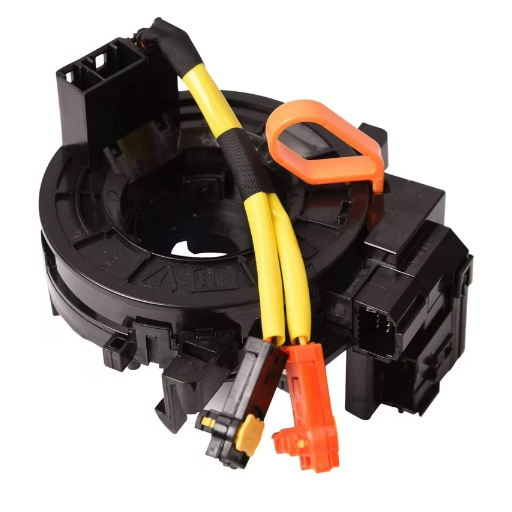
What is a Spiral Cable?
The spiral cable, also known as the clock spring, gives life to the steering system of a vehicle; the brass tacks entail maintaining electrical connection between items like airbags, horns, and cruise controls and the steering wheel all while permitting separate movement to the wheel for car turns. Conceptually, it is a ribbon integral to a coil that breaks the long way across an electric field, tightly crammed into a rugged molded casing to solidly contain signals being transmitted during steering movement.
Modifications in the design of the spiral cable are such that it loosens with turns of the steering wheel to prevent the wires inside from tangling or snapping under constant motion. A result is designed as sturdy as possible to repeatedly function consistently in the life of the vehicle. However, over time, like any other mechanical piece, the spiral cable becomes worn or exhausted. Such damages mostly occur because of undue load exhibited in such operations or spots where the earlier repair processes were wrongly applied.
⚠️ Important Safety Note: Any malfunctioning of the spiral cable – potential issues include an illuminated airbag service light, poorly responding horn, or malfunctions with steering wheel controls must be properly serviced and fixed; regular maintenance and timely replacement of the spiral cable are critical to vehicle safety and functionality, especially with systems like airbags to which the cable is critical for their reliable service.
Understanding how it is an important item for the shipped vehicle and signs of its wear and malfunction ensures that your driving experience, as well as the car itself, remains safe and faultless.
Components of a Spiral Cable Assembly
Spiral cable assembly incorporates a number of key components, which are all essential for the continuous provision of a secure electrical connection between the steering wheel of a vehicle and various systems. Understanding them would help clarify the function and importance of the assembly.
🔌 Flat Ribbon Cable
A flat ribbon cable that is wound to form a compact, coiled component structure is also a very basic part of the assemblies of spiral cable. Through this cable, electrical signals are transferred from the steering wheel to such systems as airbags, horns, and wheel control enhancing their functionality with the movement of the steering.
🛡️ Outer Housing and Inner Core
The entire spiral cable assembly is enclosed in a very durable housing with an inner core that provides sufficient stability for and protection of the ribbon cable. It helps keep the cable in place and within the spiral wound work to prevent a disconnection or stretching as the steering wheel is turned.
🔗 Connectors and Terminals
These connectors attach firmly to the vehicle’s wiring harness to establish a secure electrical connection with the other interconnected units. All together, these parts are designed to ensure the safe operation of the vehicle’s critical safety and operating systems.
Types of Spiral Cables: Single Spiral vs. Multi-Spiral
While a single-spiral cable works fine for electronic functions of a few levels and complexity on the vehicles, for any system integrated with the vehicle involving high tech, a multi-spiral cable becomes an obligatory item. The selection needs to honor integrity for maximum performance, reliability, and safety of these systems on the vehicle.
Applications of Spiral Cable Assemblies
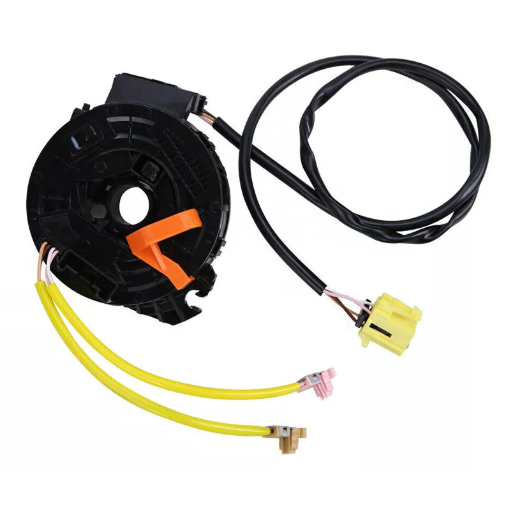
The Spiral Cable in Automotive Systems
Spiral cables are important in modern automotive systems and are used to selectively affect the transfer of resources and information among diverse components. Their very being is due to the constant need to move so that they accommodate the steering wheels, doors, and other components that require regular movement. This allows the spiral cable to maintain a flow of data and power without interfering with the durability or performance of the cable.
🔐 Critical Safety Applications
There are also situations due to the formation of the spiral cable where the airbag system becomes of prime importance. This cable is present in the steering wheel for signal transmission from control modules to airbag deployment mechanisms to function quickly and efficiently in emergencies. Apart from the steering wheel, spiral cables are indispensable for ADAS (advanced driver-assistance systems), allowing sensors and cameras to forward sensory data to processing units, thus enabling torque-assisted steering and an adaptive cruise control, among others.
Aside from safety and driver assistance, spiral cables are also propping up comfort and convenience features. These include power windows, adjustable seats, and infotainment systems, where reliable and robust cable designs are necessary for comprehensive function. Overall, spiral cables count as a critical piece in the functioning of the automotive industry, offering reliability, flexibility, and efficiency to keep up with new technological demands introduced into modern vehicles.
The Use of Spiral Cables in Sensor Technologies
Spiral cables are essential to sensor technologies today, particularly in areas like flexibility and reliability. Use of such cables is frequently needed to connect various sensors in dynamic environments, where there is ongoing movement/rotation. The capabilities of spiral cables to efficiently manage space would be a major advantage should this capability be harnessed for compressing the cable when not in use. In manufacturing industries, this cable puts a large efficacy that reflects the de facto maxim in robotics: the robot must not merely sense-gather but must inquire and sense fast in making different confinements visible fairly easily.
They are also designed to meet the tough environmental parameters, such as intermittent high temperatures, strong vibrations, and wear over a period. This enables those chain flex sensor cables to hold up strong in challenging operating environments. Using those cables in extreme environments means they are never easily damaged. The very tough machine cables, coupled with flexibility, ensure the first-rate accuracy and efficiency required in the deployment of sensor technologies in varying industries.
Integration in Steering Wheel Mechanisms
Sensor harnesses are critical for integrating present-day steering wheel mechanisms, helping in the accurate, reliable transmission of signals from the vehicle control systems. Such harnessing is what guarantees the transmission of the sensitive data of steering angle and torque in an undisturbed manner to the electromechanical control and can take very fine-grained action in this regard. The ability to resist wear through high-level engineering and sustain its proficiency over a variable number of possible uses is maintaining the durable performance of such mechanisms.
For the steering wheel operation, the cables delivering the necessary data to computers and displays that inform the driver simplify the harnessing and routing of signals. In cars with assistive steering systems, optical signal cables link active projects with their assigned computers, while withstanding rotation and physical stress. These cables are broadly integrated in the automotive control system for targeted intelligence, establishing disturbance-free remote control of the vehicle driving system.
Benefits of Using Spiral Cable Assemblies
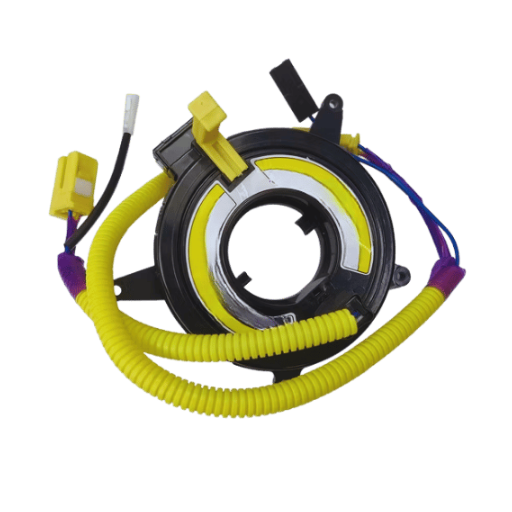
Durability and Corrosion Resistance
The spiral cable assemblies are characterized by high durability, designed to ensure long-term durability in difficult and hostile conditions. The strength of the construction can absorb any load of bending over very large angles; the tight radius of bend, when these assemblies are brought straight, can lead to cable breaking. This rugged nature of spiral assemblies makes them very desirable in applications where durability and utility over long periods are key considerations.
💡 Key Advantage: Corrosion resistance is another important characteristic of spiral cables. The jacketing, often made of polyethylene, protects the cable against environmental damage. This is an important payoff in industries such as automotive and industrial automation, wherein the equipment is often subjected to harsh environmental conditions.
The automotive world of control systems and intelligence would not be as complete without the wheel sensor cables. It is a well-known reality that data from sensors travels by cables — possibly these spiral assemblies that prevent crosstalk, signal degradation, and other issues.
Flexibility and Space-Efficient Arrangements
Flexibility and space-efficient cable design are critically important in practices focusing on both power and compact cables. High-flex cables are essential for repeated folding or bending to impart repeatable robustness and good functional ability. The feature is highly regarded in a dynamic system like a robot where the cables are in continuous motion.
- ✓ Space Efficiency: Cables are designed with smaller diameters and innovative characteristics to take up as little room as possible while moving data and power effectively
- ✓ Adaptive Design: Spiral or curly cables expand or shrink according to the actual working environment, saving space when contracted at rest
- ✓ Enhanced Reliability: These high-tech cable systems improve general system reliability and performance, ensuring smooth running even amid harsh conditions
They ensure strain-free operation, are incapable of damage, organize stuff better within limited spaces, all factors that make these irreplaceable in the automotive, industrial automation, or robotic sectors, where preferred qualities are precision and compact design.
Enhanced Performance in Dynamic Applications
Robustness and efficiency of performance are extremely important when it comes to cable systems intended for dynamic applications. Such applications in robotics, industrial automation, and high-performance machinery demand cables that can endure constant running, moving in repeated bending motions or usage that result in all other forms of environmental influences. With advanced materials, careful engineering, and stringent test protocols, high-performance cables predominantly overcome all these hurdles with a perforated existence in dynamic environments.
Versatility is one determining key aspect for enhanced performance. The cable’s design and structure are dynamic to bend, swivel, and shake without damage caused to them; thus the chances of their getting worn out or damaged are greatly minimized over time. This flexibility automatically translates to increased operational life span, as minimum repairs and replacements will be required, subsequently translating to increased system efficiency. As an additional benefit, the reduced physical stress on the cable components supports smooth, uninterrupted operation at maximum continuity even during very severe operating conditions.
Also, they have been designed in a compact form so they easily fit into incredibly tight spaces without compromising their performance. Consequently, it is an extra appeal for installations such as machinery or systems where there’s scarce room available for such places in which space efficiency is required. With their reliability and resistance to a tough environment, these cables become mandatory aspects for dynamic applications where there will be no room for inefficiency or error. Instead, they are a boon for the smooth operation of modern industry applications.
Trends and Innovations in Spiral Cable Technology
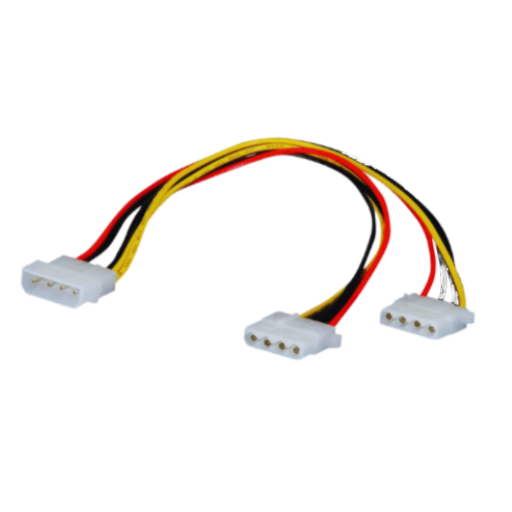
Emerging Materials and Designs
The spiral cable technology has been progressing as quickly and considering new materials and designs that greatly increase its effectiveness and durability. The first breakthrough entails using thermoplastic elastomers (TPE) and polyurethane (PU) to derive higher flexibility, strength, and long life. Moreover, these materials are resistant to extreme temperatures and harsh elements; as such, many industrial applications are a great choice for physiognomy. For this purpose, manufacturers leverage the superior conductivity of high-quality copper or aluminum conductors to ensure dependable electrical performance in harsh conditions.
🚀 Latest Design Innovations
One more distinctive development seen in the sector is the movement towards ultra-thin and compact cable designs. With industries favoring the need for space-saving, tiny yet tough cables are introduced to suit the environs of space constraints, without undermining effectiveness. Sophisticated design structure sees that the coiling mechanism is optimized in order to guarantee easy unfolding of cables and retention of their structures across repetitive usage. The focus on ergonomics also plays a role in reducing wear and tear, with the added benefit of a new lease of life for the now-ergonomic cable.
Advancements in Sensor Integration
The integration of sensors has transformed the face of modern-day technology by increasing accuracy, productivity, and adaptability in various sectors. The integration of sensors and high-tech devices enables systems to collect and analyze data in real-time inside the framework with increased accuracy, which has led to revolutionary breakthroughs in the medical, manufacturing, and environmental domains, enabling devices to operate more intuitively and more efficiently.
📱 Miniaturization
Wearable health devices use integrated sensors for continuous monitoring and real-time recommendations
🏭 Industrial Automation
Smart sensors detect deviations and prevent machinery wear, increasing productivity accuracy
🌐 Smart Cities
Wireless sensor networks enable connectivity across vast distances in challenging environments
Eco-Friendly Manufacturing Practices
Environment-friendly manufacturing strategies highlight the application of methods, materials, and procedures, all dedicated to reducing any arising environmental impacts. At the heart of such a practice lies the mechanism of saving different resources with respective aims in mind. In an effort to reduce waste, these applications attempt to keep carbon input into the environment low. In fact, manufacturers can largely impact the environment by using energy-efficient technologies and renewable energy sources.
🌱 Sustainability Focus: Waste reduction is consequently very important. Recycling and upcycling—perhaps the best implementation in terms of keeping away waste materials from flowing down to disposal zones, while reducing the demand for raw counterparts. Industrial processes that save on resources, namely water and energy, redefine the approach to environmental impact. Recyclable and biodegradable materials are starting to displace traditional ones in a move welcoming the overriding global concern about climate change.
Technical Specifications and Selection Guide
Diameter and Coil Specifications Review
When considering a spiral cable assembly’s diameter and coil specifications, it is crucial to factor in both functional and structural requirements. It is necessary for the diameter of the cable to ensure the proper conduction elongated by an electrical current without getting overheated or compromising function. Heavier cables are acceptable for ordinary and higher electrical currents; thinner cables would be suitable for electronic devices with lower power demands. This is influenced by voltage specs and the overall design of the application.
📏 Key Considerations for Coil Design
- Coil Pitch: Determines the spacing between coils and affects flexibility
- Rest Length: The natural contracted length of the cable when not extended
- Maximum Stretch: The fully extended length the cable can safely reach
- Tension Tolerance: The amount of stress the cable can withstand without damage
- Environmental Factors: Temperature, humidity, and chemical exposure considerations
A tight coil flush with more elasticity would, however, eventually tend to be worn and frayed under increasing tension—only some of the circumstances in which friction applications prevail are likely to function correctly for the more loosely coiled product that does allow unrestricted contraction and expansion. Symptomatic avoidance of deteriorative elemental factors to a considerable extent maximizes the age of spiral cable assemblies for all physical formulations, discovering the balance in size-to-wire relationships corresponding in all parameters is crucial for the maintenance of function and long life of such products.
Substitution Options for Specific Applications
When looking for which technology to reassemble a specific application with, the major factors to look out for are planned intention, the working environment, and compatibility with the existing system. A very good understanding of the application requirements like loaded capacity, flexibility, and precision is a must. This ensures that every modification made upon a given product will meet the performance level and yet return reliability to the system.
Environmental conditions are definitely a significant factor when selecting replacements. Any replacement product’s longevity, for example, would be greatly influenced by factors like temperature range, exposure to moisture and resistance to wear and corrosion. Bestowing materials suitable for these conditions will ensure optimum performance and reduce the necessity for frequent replacements, thereby saving time and cost in the long run.
⚙️ Compatibility Check: One has to go through compatibility exercises to determine the approaches under which any choices can be floated through to eliminate the possible nightmare factors of either non-fit or inefficiency from creeping in within any operation. Standard constructs with sizes, specifications, and measures would allow for moderations applied to such selections.
Factors to Consider for Optimal Performance
✅ Performance Optimization Checklist
Frequently Asked Questions (FAQ)
Q: What is a spiral cable assembly and what is its role in a vehicle?
A: What we call a clock spring or spiral cable assembly in technical language is a coil of conductors wound inside of a protective cover maintaining uninterrupted electrical connections while allowing for rotation between the steering wheel and the systems of the vehicle. The main purpose of the spiral cable assembly is to rotate which disables the possibility of wire wear and loss of connectivity during continuous transmission of data and electrical signals for devices like an airbag module, horn switch, steering control, and angle sensor.
Q: From a safety perspective, why is the spiral cable sub-assembly of prime importance as an electrical part?
A: The spiral cable sub-assembly is paramount in distributing the networked functions to the vehicle CPU and safety systems. A fault would mean a loss of communication from the airbag systems, steering controls, wheel switch, and horn, which is a red flag for safety that dictates immediate replacement.
Q: How do I know when to replace the spiral cable assembly or clock spring?
A: Signs that require replacing the spiral cable assembly are the airbag warning lights, steering wheel control or horn loss, intermittent electrical connections, and a sticky, trimming sound when steering wheels are turned. Therefore, wearing, corrosion, or damaged copper wire coils inside the assembly would deteriorate so fast that whatever can be replaced with a compatible component, say Toyota’s 84306-04080 or 84306-0E010.
Q: Does one fix a faulted coil of wires, or shall the entire part be exchanged?
A: For this reason, do not attempt to restore the spiral cable as it contains loads of wires in its coil at high precision and sensors that may be easily destroyed. Therefore it is advised that the lost spiral cable be replaced with another precisely machined one or a spiral cable sub-assembly to benefit the maintenance of mechanical/electric integrity, weather-ability, and retention of the faultless airbag system and warranty as provided for the original part.
Q: What kind of maintenance can be done for the life extension of spiral cables in automotive equipment?
A: Coiling-wise, don’t let a steering wheel turn into the stops, and electrical connections should be kept clean and corrosion-free, with the part replaced as soon as wear points become visible. Having a proper installation and proper centering alignment reduces stress on the axis, while the use of protective covers and compatible parts provides assurance that the coil will last long. This way, analysis and maintenance for various points such as sensors, switches, data transmission, etc. remain strong.
📚 References
- Civil and Mechanical Engineering Students Learning Mechanics in a Multidisciplinary Engineering Foundation Spiral
This paper explores engineering concepts, including spiral structures, which may provide contextual understanding.
Access the document here - Design of an Archimedean Square Spiral Antenna for GNSS Receivers
This thesis examines the design of spiral antennas and their interaction with cables, offering technical details.
View the document here - Electronic Design for Driving Orthogonal and Tertiary Dipoles for Acoustic Spiral Waves
This thesis discusses spiral wave designs and their applications, which may relate to spiral cable structures.
Read the document here - Get Your Solar Cable Needs Covered with JOCA – Your Trusted Supplier