





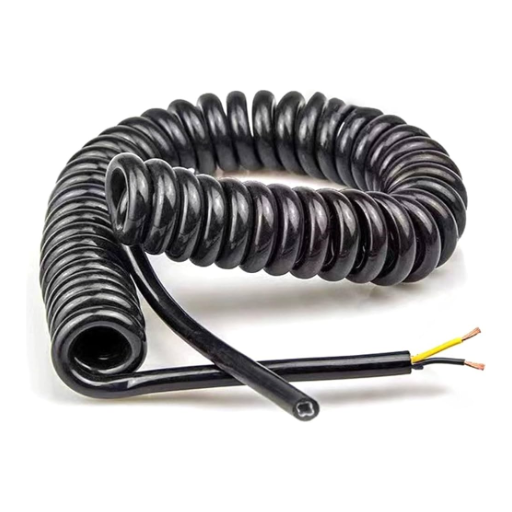
Power and connectivity solutions demand infinitely renewable and reliable features, especially when exposed to demanding environments. The Black Spiral Cable, designed as a dual-core Coil Cord, is an extraordinary and easy-to-manage innovation conceived to meet these exacting criteria. This comprehensive guide explores the characteristics, applications, and benefits of this robust cable solution that sets a new benchmark for cable organization, durability, and aesthetics.
Introduction to Spiral Cables
What is a 2 Core Spiral Cable?
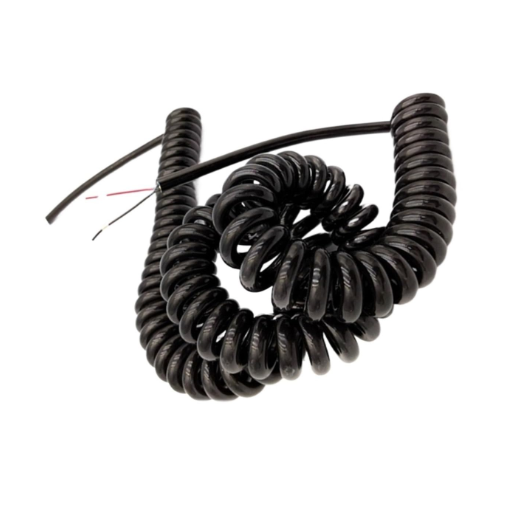
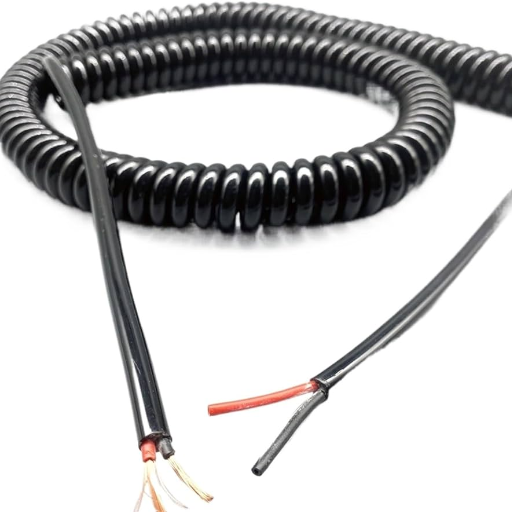
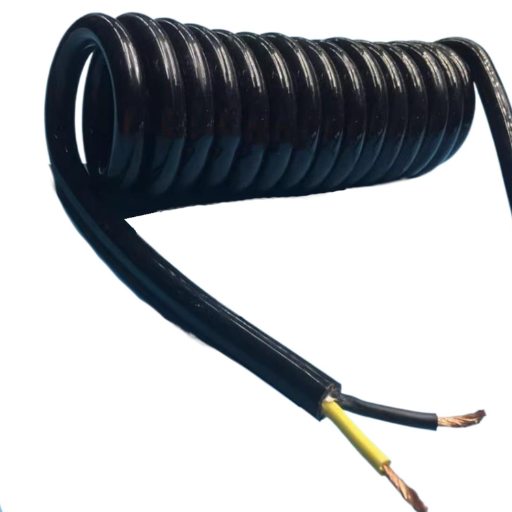
A 2-core spiral cable is an expertly coiled form of cable that ensures flexibility as well as robustness throughout the conduction of electrical signals or power from one end to the other. It is composed of two insulated conductors or ‘cores,’ wound spirally to extend or retract without getting tangled up or terminated during regular use. This design makes it ideal for applications involving frequent wear and movement.
🔑 Key Applications
These cables are positioned in machines such as telecommunication devices, medical devices, and industrial machinery, where they connect moving parts while minimizing wear and tear. The spiral design helps sustain cable capacity over time, especially with intensive use, by diminishing fatigue on the conductors.
An organized and efficient appearance is highly valued in 2-core spiral cables. Neat and clean installation guarantees minimal risk of damage or cluttering of wires, offering a functional and trustworthy choice in environments where operational efficiency and aesthetic versatility matter significantly.
Overview of Spiral Cable Design
Spiral cables are engineered to be flexible so they can be drawn out or coiled up under a durable spiral formation. The material content used in manufacturing is critical to performance. These cables offer the convenience of automatic and dynamic storage, which are prerequisites for peripherals able to perform heavy data transfer loads.
Significance in Power Applications
Precision cables in power applications furnish reliable power transmission when put under severe conditions. These cables are designed to withstand power fluctuations and ensure steady transmission even in surroundings necessitating high flexibility together with endurance.
Power efficiency is notably enhanced due to precision cables providing minimal energy losses. These cables are built with materials and structures that enhance conductivity and minimize resistance for optimal power delivery—critical for industries depending on uninterrupted power access such as renewable energy systems, industrial automation, and transportation networks.
Unique Features of 2 Core Spiral Cables
Flexibility and Durability
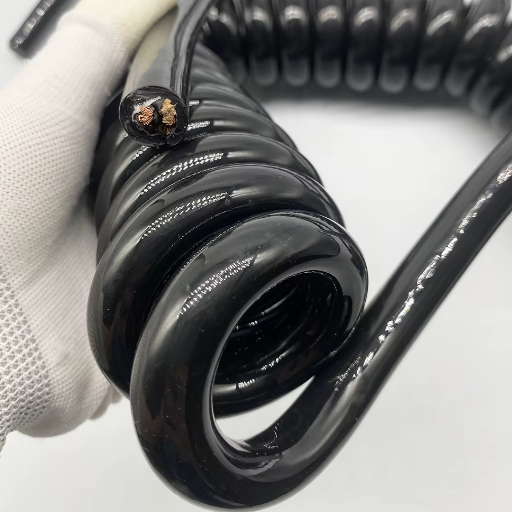
2-Core Spiral Cables are constructed with exceptional flexibility that allows them to stretch and retract without losing structural integrity. They are essential in applications involving retractable equipment or dynamic component movement. By being extendable while coiling back upon itself, they reduce the risk of tangling and the strains of constant motion.
Mechanical Stress Resistance
Withstands heavy mechanical stress including pulling, bending, and compression during daily operations.
Temperature Tolerance
Operates effectively across extreme temperature ranges without degradation of performance.
Chemical Resistance
Resistant to oils, chemicals, and environmental exposures for industrial applications.
Made from tough materials, these cables withstand the most severe conditions including heavy mechanical stress, extreme temperatures, and long exposures to oils or chemicals. They are well adapted to tough environments in industrial, transportation, and medical appliances, providing reliable service over extended periods.
Compact Design Advantages
✅ Key Compact Design Benefits
- Space Efficiency: Reduced footprint is paramount for medical apparatuses, transport vehicles, and industrial machinery where sleek designs are essential.
- Lighter Weight: Less material consumption maximizes ease of handling during manufacturing and supply chain operations, translating to economic savings.
- Maintained Performance: Compact models offer similar or better reliability and efficiency than larger alternatives while requiring less maintenance.
- Environmental Impact: Reduced material usage benefits green economy sectors and sustainability initiatives.
PVC Insulation Benefits
PVC insulation offers many advantages making it an ideal choice for various applications. Its durability provides high resistance to abrasion, corrosion, and chemicals, guaranteeing survival under harsh working conditions in the long run.
Applications of 2 Core Spiral Cables
Use in the Automotive Industry
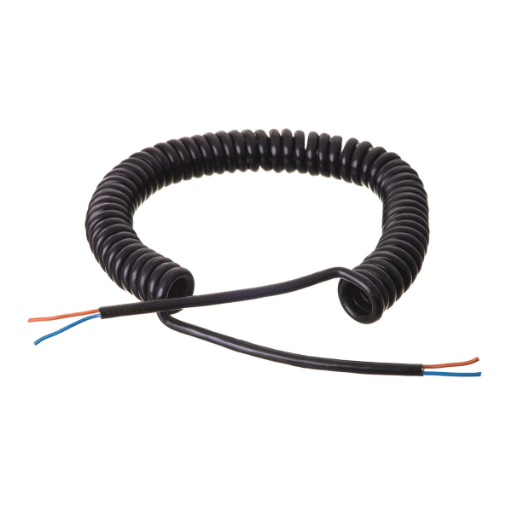
Automobile wires are essential to cater to present-day needs for flexibility and robustness. These cables address problems from devices and components in motion while maintaining designed functionality. They find application in vehicle lighting systems and communication systems, where reliable connections are safeguarded against continuous movement and vibration.
🚗 Automotive Applications Include:
- Steering wheel controls
- Dashboard components
- Rear camera systems
- Communication systems
- Lighting connections
- Sensor wiring
With high wear-resistance properties, core-spiral cables provide practical solutions to environmental components such as heat, moisture, and chemicals, outlasting most applications under adverse conditions. Their workability boosts general vehicle electrical system security and lowers risk of system failures.
Robotics and Automation
A 2-core spiral cable supports robotics and automation by offering the flexibility and durability essential for these demanding applications. Designed to withstand uninterrupted stresses of movement, bending, and twisting without compromising cable integrity or electrical performance, these cables prove highly useful for robotic arms, conveyor belts, and automated machinery requiring continuous reliable power and signal transmission with dynamic motion.
🤖 Robotic Arms
Enables flexible power delivery to articulated joints with continuous motion.
⚙️ Conveyor Systems
Reliable connections for sensors and controls along moving assembly lines.
🔧 Automated Machinery
Clean cable management for complex industrial automation systems.
The retractable coil design maintains a neat workspace, keeping cables managed despite being fastened or connected, which proves crucial in the fast-paced automation industry. This optimal combination of efficiency, endurance, and space-saving makes the dual-core spiral cable essential in modern robotics and automation.
Telecommunications and Data Transfer
The dual-core spiral cable is specifically needed for high-quality telecommunications and data transfer, enabling efficient connectivity among various systems. With its compact size and fine flexibility, it facilitates lightweight communication between devices. Through their spiral mechanism, such cables expand or contract when needed without degrading signal integrity or allowing damage due to misuse. The dual-core construction has boosted data-carrying capacity, minimizing potential data loss or distortions during transmission. This increased reliability in data communication becomes critical for application areas requiring paramount and continuous communication. The capacity to be flexible, robust, and technically efficient with data handling lends to optimal performance in modern telecommunication and automation systems.
Medical Device Integration
🏥 Medical Device Integration Overview
Medical device integration establishes connections between medical devices and central systems, such as electronic health records (EHR) or monitoring systems, ensuring seamless data exchange and improved patient care. By connecting devices in a standardized format, real-time data can be collected from equipment including ventilators, infusion pumps, and patient monitors to support better clinical decision-making.
The use of dual-core spiral cables becomes significant in medical applications demanding flexibility in cable management. These cables are designed to extend and retract without tangling or breaking, making them most usable for dynamic hospital environments. The two-core design transmits energy or signals from medical devices to central systems, assuring stable communication lines and uninterrupted connectivity. Employing such standards reduces risk of human error by automating information collection from various devices. This includes more available data during patient crises, as caregivers have access to all pertinent information. Care quality and process outcomes improve with connected technology extending the care delivery model.
Comparative Analysis: 2 Core vs. Traditional Cables
Performance Metrics
Strength, power efficiency, and user-friendly functionalities are clearly differentiated when comparing a 2-core cable vis-à-vis conventional cables. The 2-core cable is designed for applications with reduced electrical load and offers a simple design with fewer components. This design normally gives rise to lesser resistance and improved energy efficiency, especially during simple installations.
Cost-Effectiveness and Efficiency
When conducting cable selection with cost-effectiveness as a prime priority, consider both capital investment and operating costs during long-term operation. Cost-wise, 2-core cables are relatively inexpensive as they have straightforward designs, saving on material and manufacturing costs while remaining energy-efficient for installations. These cables work well in scenarios where high power capacity and supreme durability are less critical, making them a lucrative option for cost-conscious projects where simplicity is the keyword.
✅ 2-Core Cable Advantages
- Lower initial investment
- Reduced material costs
- Easier installation
- Lightweight handling
- Ideal for simpler applications
⚖️ Traditional Cable Advantages
- Higher load capacity
- Additional grounding options
- Better for high-demand scenarios
- Superior long-distance efficiency
- Enhanced safety features
The balance between cost and efficiency ultimately depends on project specifications. While smaller, local installations suit lower-priced two-core cables, larger projects with higher demands may require greater investment in solid cables, guaranteeing reliability and system performance over time.
Industry Trends and Future Innovations
Material Science Developments
Material science continues exploring new possibilities with technological improvements. These developments relate to physical, mechanical, and protective properties (such as heat, moisture, and chemical resistance), with better performance from plastics and composites for improved durability, flexibility, and efficiency. The applications of these concepts for cable structures influence cable lifecycles, especially in harsh industrial and outdoor environments.
Smart Technology Integration
🔮 Smart Cable Features
Modern cables now incorporate advanced sensors for real-time monitoring capabilities:
- Temperature monitoring for heat detection
- Stress sensors for structural integrity
- Voltage monitoring for electrical safety
- Predictive maintenance alerts
The presence of smart cables improves operational safety and efficiency by permitting predictive maintenance to detect and resolve potential problems before they lead to failure.
Sustainability in Cable Manufacturing
An important component shaping the cable business is sustainability. Many manufacturers have been considering ecological practices to contribute their part in recycling materials and reducing their footprint during manufacturing. Products such as biodegradable cable insulation and ecologically proven packaging alternatives support ongoing proliferation of responsible manufacturing best practices.
Emerging Innovations in Spiral Cables
Advancements in Materials
Durable Polymers
Flexible materials that withstand high temperatures, moisture, and UV exposure without altering structural integrity.
Eco-Friendly Alternatives
Biodegradable and recyclable polymers tackling environmental concerns while meeting performance standards.
Advanced Copper Alloys
Enhanced electrical conductivity and corrosion resistance for effective power transmission and distribution.
New Applications on the Horizon
Advancements in copper alloys and durable polymers provide opportunities for innovative applications across industries. These materials make spiral cables significant in renewable energy, automation, and transportation. In hostile environments where regular cables fail, their excellent conductive quality, flexibility, and corrosion resistance render them ideal.
Future Trends in Cable Design
The future of cable design provides for improvement in efficiency, durability, and eco-friendliness. As technology advances, cables must carry additional capacity while maintaining flexibility and reducing weight. Next-generation integration of lightweight materials, such as composite conductors and advanced polymers, has gained acceptance to withstand the specific demands of industries like aviation, automotive, and telecommunications.
📈 Key Future Trends
Smart technologies are being integrated into cable systems. Utilities with smart cables featuring sensors and monitoring systems can detect abnormalities and optimize performance in real time. These features enhance reliability and safety in various applications including power distribution, transportation, and industrial automation.
Frequently Asked Questions
References
- Get Your Solar Cable Needs Covered with JOCA – Your Trusted Supplier
- The Spiral Coaxial Cable This article discusses applications of spiral coaxial cables in telecommunications and networking. Read more on Wiley Online Library →
- Load Transfer Characteristics of Spiral Cable Bolts This research explores the mechanical properties and load transfer characteristics of spiral cable bolts. Read more on University of Wollongong Research Online →
- Spiral Strand Cables Subjected to High Velocity Fragment Impact This research focuses on structural applications of spiral strand cables in various engineering fields. Read more on ScienceDirect →