







When it comes to household appliances, a hair dryer can almost become essential for daily tasks. Have you ever considered how much electricity it would use? Knowing how many amps your dryer needs helps you manage your power consumption, and it also shows that your wiring and outlets can safely handle the load. This blog takes a deep dive into specifying how many amps, on average, hair dryers use, why it matters, and what can influence this usage. Whether you’re curious about energy efficiency, looking to upgrade your appliances, or simply wish to stay informed, we have all the information you need here. So, keep reading to unravel all the details and bolster your next hair dryer decision!
Understanding Hair Dryer Use
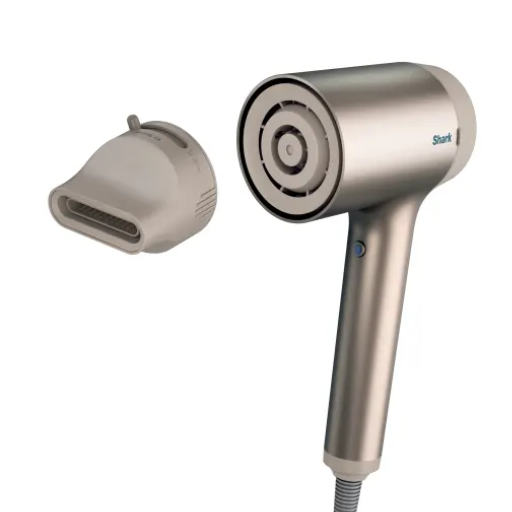
At full speed, hair dryers draw anywhere between 15 and 20 amps of current. The range for current depends on the rating, generally between 1,875 and 2,500 watts for a typical unit. Amperage can be calculated by dividing the wattage rating by the electrical voltage, typically 120 volts in the U.S. Always verify that you’re using a circuit that can handle the load, as overloading your electrical system is possible.
What is a Hair Dryer?
A hair dryer, also known as a blow dryer, is a device that uses air to blow on damp hair, hastening water evaporation and thereby speeding up the drying and styling process. Hair dryers were first used in the early 1920s, and modern variants are significantly more efficient, technologically advanced, and versatile. The appliance generally works by heating air through a heating unit while a motor-fan forces the air in the direction of a nozzle.
Types of hair dryers exist, featuring ionic, ceramic, and tourmaline technologies, which provide slightly different benefits. Ionic dryers generate negatively charged ions to break down water molecules, reducing frizz while enhancing shine. Ceramic dryers emit even heat and gentle drying, which is gentle on hair, while Tourmaline technology intensifies this effect by producing more negative ions to smooth the finish.
The temperature of the air produced by a hair dryer varies significantly. It can range from 80°F at the lowest setting to 140°F on higher settings; the temperature tends to rise even higher with professional models. When it comes to the speed of the airflow, professional-grade dryers blow the air at more than 50mph, drying the hair much faster.
Once again, hair dryers have safety mechanisms that include overheat protection and incredible shots, which are used as finishing sprays. Due to ongoing innovation in the beauty industry, some models now incorporate digital motors, intelligent heat control, and even attachments tailored for specific hair types, all in the name of enhanced performance.
How Hair Dryers Work
Hair dryers work by transforming electric energy into heat and using airflow to dry hair. Situated inside the hair dryer is a small fan powered by an electric motor. This fan powers air through small vents. The air is then carried over a heating element, such as a nichrome wire, which glows hot upon energization due to its excellent electrical resistance. The warm air escapes out of a wide nozzle and can be directed to the hair for rapid evaporation of water from the hair strands.
Modern technology has transformed the hair dryer into a significant source of improvement in terms of efficiency and hair care. For example, ionic hair dryers release negatively charged ions that help break down water molecules at an even faster rate while preventing static and frizz. Some professional hair dryers may have ceramic coatings on their heating elements to distribute heat evenly, thereby eliminating hot spots that can cause significant hair damage. Additionally, models equipped with digital temperature sensors monitor the temperature output of the heating elements within milliseconds, ensuring even performance and preventing the hair from overheating.
It is said that standard hair dryers can generate airflow speeds in the range of 30-40 mph, while those considered high-end can reach speeds above 50 mph. Temperature outputs usually range from 90 to 150 degrees, with more advanced models offering several heat and speed settings. They are designed to dry hair while keeping it healthy quickly, serving as essential tools for personal grooming.
Importance of Knowing Amp Ratings
When selecting and using electrical appliances, it is essential to consider the amp ratings. The amp rating specifies the amount of current an appliance needs to operate efficiently. Most modern hair dryers operate within a range of 10 to 15 amps, whereas regular household outlets typically support a maximum of 15 or 20 amps. Knowledge of this amp rating is necessary for safe use and to avert electrical hazards.
Exceeding the amp rating of an electrical circuit can cause overheating and tripping of breakers, and in rare cases, it may pose a risk of fire. For example, if a 15-amp hairdryer is operated on a circuit that is already heavily loaded with other high-powered devices, it would cause an overload of the circuit. Another reason to understand amp ratings is to select appliances that suit a user’s domestic electrical system and optimize energy use while fulfilling functionality.
Amp ratings are a consideration when traveling. For example, U.S.-type hair dryers, designed for 120-V systems, may require an adapter or converter when used in countries with 240-V systems. With some practical knowledge of amp ratings, users can make informed decisions that maximize safety, protect appliances, and contribute to effective electrical management in everyday life.
Hair Dryer Amps Explained
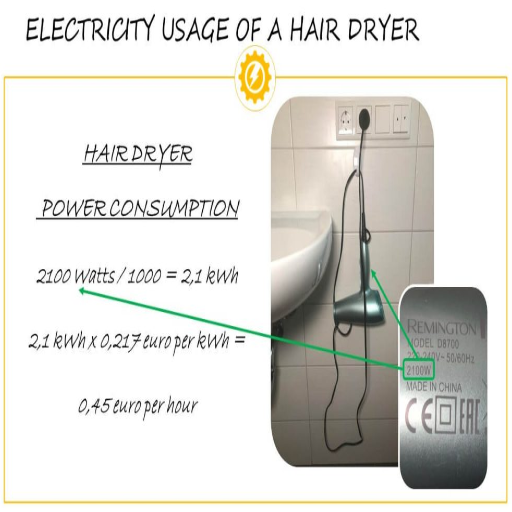
The amp usage of a hair dryer depends on the electric wattage and the voltage of the electrical system into which it is being plugged. Most modern hair dryers range from 15 to 20 amps when used on a 120V circuit. A 1,800-watt hair dryer on a 120V circuit would thus draw 15 amps (calculated as watts divided by volts). The circuit should be able to support the amp rating of the hair dryer; otherwise, it would overload and trip the breaker. From time to time, check the label on your hair dryer for the wattage, and then verify that the outlet and circuit can accommodate it.
Typical Amp Ratings for Hair Dryers
Hair dryers typically operate between 15 and 20 amps, according to a 120-volt electrical system. The amperage varies depending on the wattage, which is usually indicated directly on the unit. An example: a 1,500-watt hair dryer would draw roughly 12.5 amps of wattage/voltage. Conversely, units with higher wattage, such as 1,875W, would draw close to 15.6 amps.
Professional high-power dryers may draw up to 20 amps, especially when designed for use with saliva and intended for faster drying times. Furthermore, hair dryers with a dual voltage rating (commonly 120/240 volts) require a different number of amps depending on the voltage setting in use. For instance, on a 240-volt system, a 1,500-watt dryer would only need half the amperage, approximately 6.25.
Consider the limitations of the circuits when purchasing a hair dryer. Most residential circuits in the United States support 15 or 20 amps, and they can be run into overload trouble if several high-power devices are connected to the same circuit. Always check the specific product specifications before matching them with your electrical setup, for safety reasons.
Calculating Your Hair Dryer’s Amps
Ampere is a unit of measurement for the flow of electric charge. The equation is:
Amps = Watts ÷ Voltage
For instance, a 1500-Watt hairdryer operating on a 120V system would pull 12.5 amps:
Amps = 1500 ÷ 120 = 12.5 amps
In the same way, the usage of a 1500-watt hairdryer in a 240V system would be:
Amps = 1500 ÷ 240 = 6.25 amps
Therefore, one should check both the wattage (usually indicated on the label or packaging of the product) of a hairdryer and the voltage of the electric system. A typical household voltage in the US is 120V, unlike in other countries that typically use 220-240V.
Choosing a hairdryer with an electrical rating suitable for your region will ensure that circuits are not overloaded, thereby preventing overheating hazards. For precision, factor in the different features of your hairdryer that may affect total power consumption. More power would be diverted if ionic technology or turbo modes are in use. Look for features like auto shut-off and a low-energy mode, which complement the safety aspects, allowing you to use the unit at home with confidence.
Factors Affecting Hair Dryer Amps
Several factors determine the amperage rating (in amperes) of a hair dryer; understanding these main factors is an excellent way to select the best appliance for your needs. The first factor that affects the amperage is the power rating of the hair dryer. Most hair dryers are rated in watts, 1,200 to 1,875. Using the formula Amps = Watts / Voltage (Where the standard voltage in the U.S. is 120 volts), most hair dryers draw approximately 10 to 15 amps. High-wattage units, especially those with high-tech settings, will require more power and accordingly will demand higher amperage.
The setting of the device is another factor that affects current draw. A hair dryer that offers multiple heat or speed settings typically allows power consumption to vary. For example, the lower heat setting draws less amperage, while the turbo setting or top heat setting draws the maximum power. Additional high-tech features, such as ionic generator-based technology, can reduce drying time and minimize frizz; however, they may slightly increase power consumption.
Quality construction, motor, and energy efficiency are other factors considered. Professional-level hair dryers, which typically employ AC motors, are built to last and perform more efficiently than their cheaper counterparts with DC motors, and thus probably draw a few more amps during operation. Conversely, energy-efficient designs or eco-modes aim to reduce power draw without compromising performance. It’s essential to consider these factors, and when doing so, one must always consult the manufacturer’s specifications to ensure compatibility with the home’s electrical system and circuit capacity.
Wattage and Its Relation to Amps
Wattage and amps remain very closely related to each other. They measure the power consumption of a device. Wattage refers to the total power an appliance consumes, while amps measure the current flowing through a circuit. Their relationship can be described mathematically through the following formula:
Amps = Watts ÷ Volts
Hence, if your appliance is using 1,200 watts and is operating on circuits with 120 volts, it means that it is drawing a current of 10 amps (1,200 ÷ 120 = 10). A helpful tip is always to ensure that you use the amperage rating to prevent your appliance from overloading your circuit and causing electrical problems. Always check the manufacturer’s specifications for the exact wattage and amp ratings.
How to Calculate Watts from Amps
This refers to the voltage of the circuit. The formula is
Wattage = Amperes × Volts
Using the formula, one can find out the wattage of any appliance given the current (in amperes) and the potential difference (in volts) applied to it. So, if a washing machine is drawing 5 amperes on a 240-volt circuit, it is essentially consuming 5 × 240 = 1,200 watts of power.
In the case of AC circuits, particularly for motors or complex electronic devices, it is sometimes necessary to consider the power factor in calculations. The power factor (between 0 and 1) is a measure of energy loss due to the differing phase angles of voltage and current.
For example, if the washing machine described above had a power factor of 0.9, the calculation would be:
Watts = Amps × Volts × Power Factor
5 × 240 × 0.9 = 1,080 watts. The correction is to express wattage in terms of the actual power used by the appliance. Always consult the device’s specifications for the exact voltage, current, and power factor, if available.
Understanding the Wattage of Hair Dryers
Among all household appliances, hair dryers also have a wide range of wattage, depending on their design, features, and intended use. Generally, hair dryers operate at a power range of 800 to 1,800 watts. The 800- to 1,200-watt range offers the majority of low-wattage drying machines, which tend to be compact and designed for travel, making them portable and consuming less energy. With a power rating of between 1,500 watts and 1,800 watts, high-wattage dryers are preferred mainly by professionals or individuals seeking a fast drying time.
In addition to wattage levels, one should also consider recent technological developments. Modern technologies enable models to be manufactured with energy-efficient motors, such as DC motors or those utilizing ionic technology, which can dry hair effectively with minimal energy consumption. Additionally, using heat and speed settings can be a wise way to conserve power. For instance, assuming a standard high-watt dryer runs for only 10 minutes per day, it can consume approximately 300-watt hours of electricity in a month. Hence, knowing the wattage and frequency of use of an appliance helps one get a rough estimate of the energy consumed, leading to a more eco-friendly option.
Comparing Watts and Amps in Household Appliances
In any discussion about watts and amps for household appliances, it’s essential to describe their roles in electricity. Watts tell the total energy consumption or power of an appliance. Thus, it is the multiplication of volts and amps (Watts = Volts × Amps). Amperes measure the actual electrical current in a device, so appliances with higher wattage use more energy to operate, whereas appliances with higher amperage draw more electrical current.
A microwave working in a 120-volt circuit rated 1,200 watts will draw 10 amps. Unlike that, refrigerators generally consume fewer watts in a day, yet they run all day, so over time, they draw the maximum amount of energy. Understanding this concept enables consumers to purchase energy-efficient appliances and prevent overloading electrical circuits. It is always best to refer to the label or manual to check the voltage, wattage, and amperage rating of any appliance before making an informed selection, considering both performance and sustainability.
Circuit Considerations for Hair Dryers
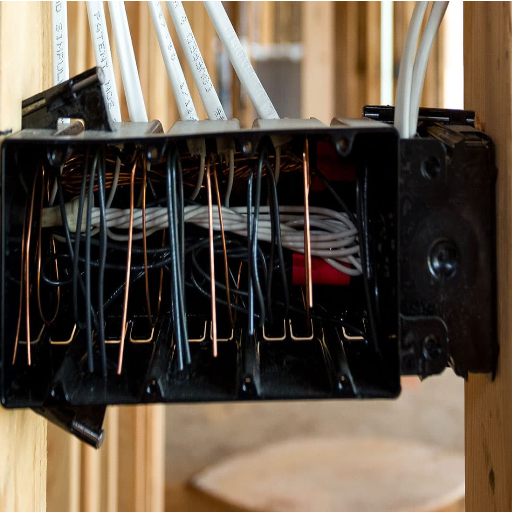
With these being high-powered tools, depending on the model, hair dryers generally range in power consumption between 1200 and 1875 watts. Assuming a voltage of 120 volts, the resulting current is between 10 and 15 amps. Due to this very high current draw, hair dryers should be used on a dedicated circuit to avoid overload. Sharing a circuit with other high-power equipment, such as space heaters, microwaves, or refrigerator motors, may cause a circuit breaker to trip. It is prudent to double-check the electrical capacity of your circuit and ensure that the outlet is protected by Ground Fault Circuit Interrupters (GFCIs). Doing so is especially important if used in bathrooms.
Using a Hair Dryer on Different Circuits
When using a hair dryer plugged into various electrical systems, it is essential to know the circuit’s load capacity to ensure safety and avoid electrical hazards. Household circuits in the United States are most commonly rated at 15 or 20 amps. Hair dryers can draw 10 to 15 amps, depending on the power rating of these dryers. Shared with other high-energy-use appliances such as space heaters (12.5 amps for a 1500-watt heater) or toaster ovens (often 8 to 12 amps), circuits may overload, and breakers trip.
Thus, having a dedicated 15-amp circuit for a hair dryer allows it to operate without sharing power with other devices. If unshared, a microwave (requiring 10 to 14 amps) may be shared on the same circuit and can quickly push the total load above the limit. Hence, careful management of device usage is crucial to prevent multiple energy-demanding appliances from being connected to the same circuit.
Another safety feature would be to ensure that the outlets in use are GFCI-protected, especially in areas with moisture, such as bathrooms or sink areas. A GFCI outlet will instantly cut power if it detects a ground fault or current leakage, guarding against shock hazards.
By understanding the power requirements of your hair dryer and any other devices that may be on the same circuit, you can minimize risks and ensure the efficient and safe operation of your home electrical system.
Bathroom Circuit Requirements
When designing or updating circuits in a bathroom, it is crucial to stay current with modern electrical codes to ensure safety and optimal efficiency. Generally, a bathroom requires at least a 20-amp circuit to power outlets designed to accommodate heavy-duty appliances, such as hair dryers, electric razors, and curling irons. This 20-amp circuit should serve only the bathroom area of the home.
So, according to national regulations, any outlet within 6 feet of a water source must be protected by a GFCI (Ground Fault Circuit Interrupter). Such outlets prevent electric shocks by recognizing an imbalance in electricity flow and immediately cutting out power. On the other hand, bathroom lights should ideally be placed on a separate 15-amp circuit, which helps refine the system load during periods of heavy outlet usage.
Modern bathroom safety and utility can be further enhanced by providing energy-efficient LED lights, exhaust fans equipped with moisture sensors, and other options. Going beyond the bare minimum to install more outlets or even USB charging points significantly enhances usability in a family-sharing bathroom. Regular inspections and adherence to updates on electrical code keep bathroom circuits safe and capable of supporting today’s requirements.
What to Do if Your Circuit Breaker Trips
In the event of a circuit breaker tripping, my first precaution is to switch off all devices and appliances and unplug them from the socket in that area to prevent overloading when the breaker is reset. After that, I locate the electrical panel, identify the tripped breaker (it will generally be in a neutral or halfway position), and forcefully reset it by first switching it off and then back on. If the breaker is continuously tripping, I would refrain from further attempts to reset it and call a professional electrician to evaluate the situation, as this could pinpoint a larger electrical problem. Safety always comes first.
Energy Efficiency of Hair Dryers
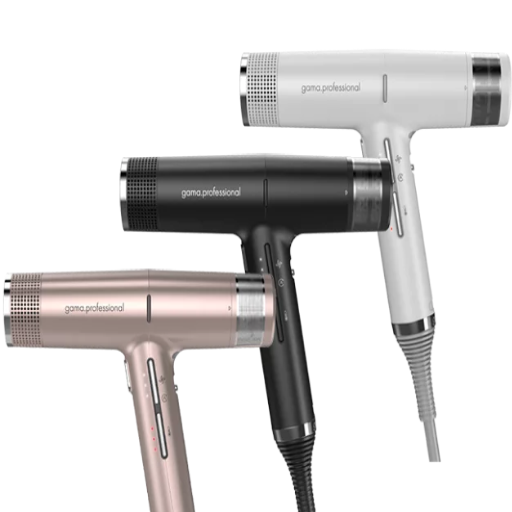
Depending on the design and features, a hair dryer may differ significantly in terms of energy efficiency. Natural clients consume very little energy due to their low wattage, but they also tend to dry hair very slowly. Energy efficiency means that the dryer kit strikes a balance between power and efficiency through the use of technologies like ionic or ceramic heating elements, which dry faster using less energy. Additionally, an energy-efficient dryer features adjustable heat and speed settings. Keeping this in mind, it’s always best to blot the hair vigorously using towels before using the hair dryer for greater energy efficiency.
How Much Electricity Does a Hair Dryer Use?
Electricity consumption and operational hours determine the energy use of a hair dryer. Most hair dryers are rated between 800 and 2000 watts; the higher-end models are often worth a greater consumption for faster drying. Using a 1500-watt hair dryer for 10 minutes would result in an electricity consumption value of approximately 0.25 kWh (1500 watts × 10 minutes ÷ 60 minutes). If such a hair dryer is used daily, the monthly electricity consumption would amount to 7.5 kWh.
For comparison, the operating cost of a hair dryer will vary depending on the local electricity rates. With an average electricity rate of $0.15 per kWh, a 1500-watt hair dryer, used daily, would cost approximately $1.13 per month. Yet, more energy-efficient models, equipped with advanced technologies, can reduce this cost for the user. Additionally, lowering the heat setting will result in a significant reduction in operating time, while still achieving a great finishing touch.
Tips for Reducing Energy Consumption
Unplug Appliances When Not in Use: Many electronic devices and appliances consume energy even when turned off, a phenomenon known as standby power or “phantom load.” By unplugging devices such as chargers, TVs, and computers when they are not in use, households can save up to $100 per year on electricity bills.
Switch to Energy-Efficient Lighting: Replacing traditional incandescent bulbs with LED bulbs is one of the easiest ways to reduce energy consumption and lower your electricity bills. LEDs use approximately 75% less energy and last up to 25 times longer. For example, switching ten incandescent bulbs to LEDs can save roughly $75 annually.
Use Smart Thermostats: A smart thermostat allows you to optimize heating and cooling schedules, ensuring energy is only used when necessary. Studies show that using a programmable thermostat can save up to 10–15% on annual heating and cooling costs.
Choose Energy-Efficient Appliances: When replacing old appliances, look for ENERGY STAR-certified products, which use significantly less energy. For instance, ENERGY STAR refrigerators use about 20% less energy than non-certified models, saving approximately $150 over the appliance’s lifetime.
Optimize Laundry Practices: Washing clothes in cold water instead of hot water can cut energy usage for each load by up to 90%. Additionally, air-drying clothes instead of using a dryer saves energy and reduces wear and tear on clothing.
Seal and Insulate Your Home: Proper insulation and sealing gaps around windows and doors help maintain indoor temperatures more efficiently. A well-insulated home can lower heating and cooling costs by up to 20%, depending on the climate and home condition.
Limit Hot Water Usage: Water heaters account for a significant portion of energy use in most households. Lowering the water heater’s temperature to 120°F and using low-flow showerheads can significantly reduce energy consumption, resulting in annual savings of hundreds of dollars in some cases.
Leverage Solar Power: Installing solar panels can be a long-term solution for reducing reliance on grid electricity. Although the upfront cost can be high, tax incentives and reduced energy bills can make solar energy cost-effective in the long run.
By implementing a combination of these strategies, households can reduce their electricity consumption, save money, and contribute to a more sustainable future.
Choosing Energy-Efficient Hair Dryers
While energy efficiency and performance do go hand in hand, several factors do intervene in this wet art of drying hair. Modern hair dryers have integrated technology to provide an alternative for faster drying with reduced electricity usage. Ionic or ceramic-type dryers, thus, are good by these standards: they provide even heat and dry hair quickly, thereby reducing energy consumption during each drying treatment.
Energy-efficient hair dryers generally range between 1,200 and 1,800 watts, providing enough power to perform well without compromising energy conservation efforts. Some models even offer adjustable heat or speed settings, adding a level of personal customization to the drying experience. Studies show that one can save approximately 20% annually on electricity consumption by using energy-efficient hair dryers instead of their older or higher-wattage counterparts.
When selecting a product, focus on dryers that bear the ENERGY STAR logo or a similar certification that verifies the equipment’s adherence to strict energy-saving standards. In conjunction with energy-efficient options, environmental sustainability can be further enhanced by using the device wisely.
Reference Sources
Frequently Asked Questions (FAQs)
How many amps do hair dryers typically use?
Most hair dryers use between 10 and 15 amps of power. The exact amperage can vary depending on the wattage of the hair dryer, with average hair dryers consuming around 1800 watts. To calculate the amps used, divide the wattage by the voltage (usually 120 volts in the U.S.), which provides a better understanding of how many amps your device draws.
What is the wattage of a typical hair dryer?
The wattage of hair dryers can range from 800 to 1800 watts. Many hair dryers come with adjustable settings, allowing users to select different wattage levels for more energy-efficient usage. Higher wattage typically means faster drying times, but can also consume more electricity.
How does the amp rating affect hair dryer usage?
The amp rating indicates the amount of electricity a hair dryer uses while operating. A hair dryer with a higher amp rating, typically between 10 and 15 amps, will draw more power from a circuit, which can affect the overall energy consumption and may require a dedicated circuit to avoid tripping the circuit breaker.
Can I run a hair dryer on a 15-amp circuit?
Yes, you can run a hair dryer on a 15-amp circuit, provided that the combined load of all appliances on that circuit does not exceed 80% of the circuit’s capacity. Most hair dryers are designed to operate safely on standard household circuits; however, it’s essential to check the wattage and ensure it does not exceed the circuit’s limit.
How to calculate the amps used by my hair dryer?
To calculate the amps used by your hair dryer, you can use the formula: Amps = Watts / Volts. For example, if your hair dryer is rated at 1800 watts and operates on a 120-volt outlet, the calculation would be 1800 watts / 120 volts = 15 amps.
Do travel hair dryers use less electricity?
Travel hair dryers typically consume less electricity than standard models, often ranging from 800 to 1200 watts. This lower wattage means they draw fewer amps, making them more energy-efficient and suitable for use in various voltage settings when traveling.
What happens if I use a hair dryer without a proper circuit?
Using a hair dryer without a proper circuit can lead to tripped circuit breakers or even electrical fires. It’s crucial to ensure that the circuit can handle the amp rating of the hair dryer to avoid overloading the system and causing safety hazards.
How much electricity do hair dryers consume?
Hair dryers consume different amounts of electricity based on their wattage and usage duration. On average, running a hair dryer for 30 minutes can consume around 900 watt-hours, translating to a significant portion of your monthly electricity bill, depending on your electricity rate.